Meta Title: Oil Separator 010454350 / B006700770018 | Air Compressor Parts
Meta Description: Discover Oil Separator 010454350 / B006700770018 for compatible air compressors. Improve oil separation, air quality, efficiency and compressor reliability.
Focus Keyword: Oil Separator 010454350
Secondary Keywords: B006700770018, air compressor oil separator, compressor oil separator, oil separator filter, air compressor spare parts, screw compressor parts
Introduction
A reliable oil separation system plays an important role in the performance of an oil-injected air compressor. During compression, the compressor mixes lubricant with the compressed air inside the compression system. The compressor must then separate the oil from the compressed air before delivering air to downstream equipment. An efficient oil separator helps recover oil while allowing cleaner compressed air to continue through the system.
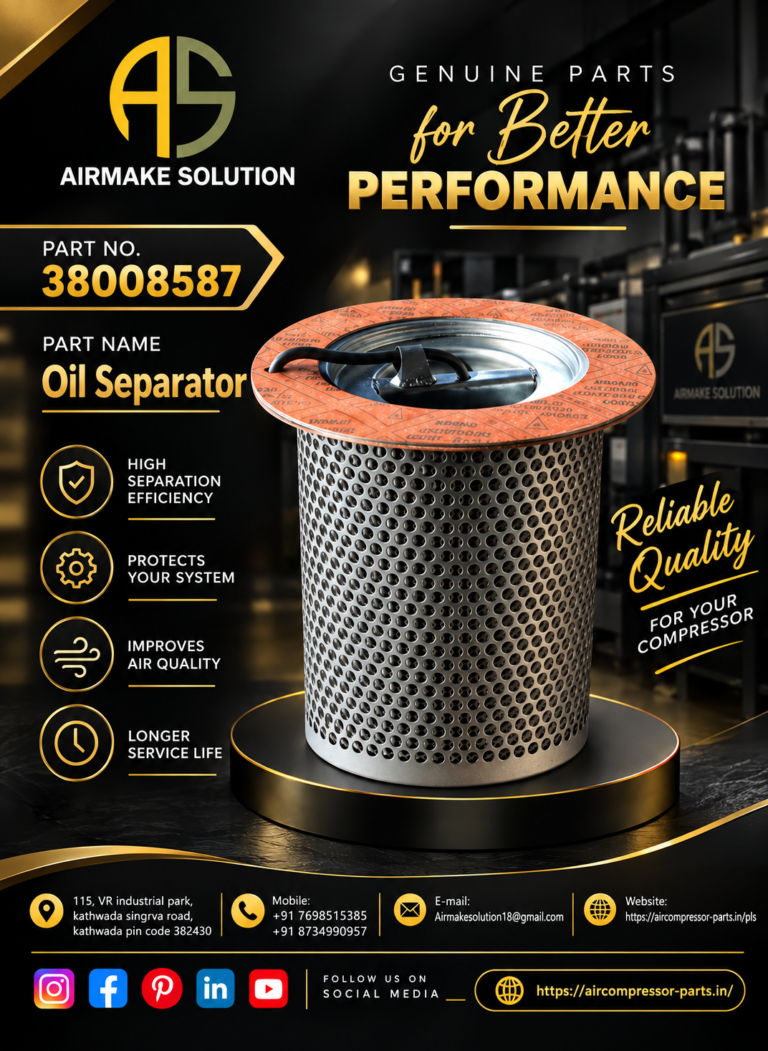
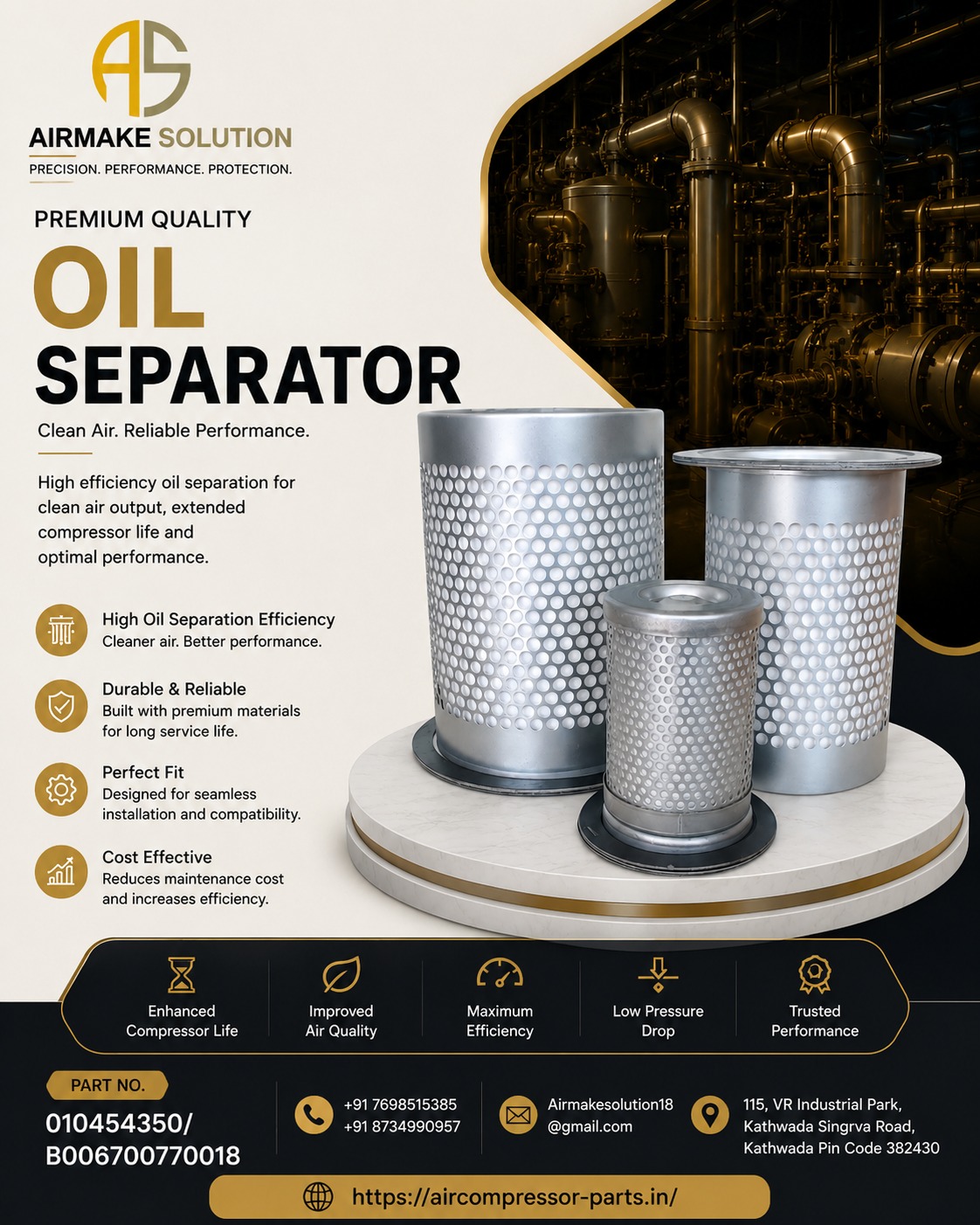
The Oil Separator 010454350 / B006700770018 shown in the supplied product image is designed as an air compressor oil-separation component. AirMake Solution presents this product with a focus on oil separation efficiency, durability, reliable performance, proper fit, reduced pressure drop, improved air quality, and compressor maintenance.
Choosing the correct oil separator and replacing it at the appropriate service interval can help maintain compressor performance and protect the overall compressed-air system.
Understand How an Oil Separator Works
An oil separator performs an important function inside an oil-injected screw compressor. The compression process uses lubricant to support lubrication, cooling, and sealing. After compression, the air contains oil that must be separated before the compressed air reaches the air outlet.
The separator captures oil droplets from the compressed-air stream through a coalescing separation process. Separated oil collects and returns to the compressor’s oil circuit, while the treated compressed air moves toward the air cooler and downstream system.
A properly functioning oil separator filter therefore helps the compressor maintain oil recovery and cleaner compressed-air delivery.
Improve Compressed Air Quality
Compressed air often powers pneumatic tools, automation equipment, manufacturing machines, and other industrial processes. Excessive oil carryover can affect equipment and product quality, especially where clean compressed air matters.
The 010454350 / B006700770018 Oil Separator helps support oil separation within compatible compressor applications. By reducing oil carryover, an effective separator contributes to cleaner air entering the downstream compressed-air system.
Cleaner compressed air can help reduce contamination-related maintenance and support more consistent operation of air-powered equipment.
Maintain Efficient Oil Separation
Oil separation efficiency directly influences the performance of an oil-injected compressor. When the separator operates correctly, it separates oil from compressed air and allows the recovered lubricant to return to the compressor circuit.
A separator that becomes heavily loaded or deteriorates can affect the separation process. Increased oil carryover may occur, while pressure drop across the separator can also increase.
Replacing the separator when required helps maintain the intended separation performance. For this reason, technicians should include oil separator inspection and replacement in their regular compressor maintenance schedule.
Reduce Unwanted Oil Carryover
Oil carryover occurs when lubricant passes through the separator and enters the compressed-air outlet. A small amount of oil carryover may be expected in some systems, but excessive carryover can indicate a maintenance or separator problem.
Several conditions can contribute to excessive oil carryover, including:
- A saturated or damaged oil separator
- Incorrect compressor oil level
- Incorrect lubricant
- Poor maintenance practices
- Operating conditions outside recommended limits
- Problems with the oil return system
- Incorrect separator installation
The Oil Separator 010454350 / B006700770018 can help control oil carryover when correctly matched to the compressor application and installed according to the applicable service procedure.
Support Compressor Efficiency
Pressure drop represents an important consideration when maintaining compressed-air equipment. As a separator accumulates contaminants or becomes restricted, airflow resistance can increase.
Higher pressure drop can force the compressor to work harder to achieve the required operating pressure. Maintaining the separator can therefore contribute to efficient compressor operation.
The product image highlights low pressure drop and maximum efficiency as key benefits. Actual performance depends on the compressor design, operating conditions, separator condition, and correct installation.
A clean and correctly selected separator supports the compressor’s intended air and oil flow characteristics.
Extend Compressor Service Life
Compressor reliability depends on the condition of several interconnected components. The oil separator is one part of a larger lubrication and air-treatment system.
When the separator maintains effective oil separation, the compressor can recover lubricant and reduce oil entering the downstream air circuit. Proper oil management supports the compressor’s lubrication system and helps maintain operating conditions for internal components.
Regular replacement of worn service components can also help technicians identify developing problems before they cause significant downtime.
Using the correct air compressor oil separator as part of preventive maintenance can therefore contribute to long-term equipment reliability.
Choose the Correct Oil Separator Part Number
Part-number verification is essential before purchasing an oil separator. The supplied product image identifies the separator with the part numbers 010454350 / B006700770018.
However, a part number should always be checked against the specific compressor application before installation. Similar-looking separators can have different dimensions, sealing arrangements, filtration characteristics, connections, or operating requirements.
Before ordering, confirm:
- Part number: 010454350 / B006700770018
- Compressor manufacturer
- Compressor model
- Compressor serial number
- Existing separator identification
- Manufacturer’s parts documentation
- Required installation specifications
This verification helps prevent incorrect-part issues and supports proper compressor maintenance.
Replace the Oil Separator During Planned Maintenance
Preventive maintenance provides an opportunity to replace service components before they cause unexpected problems. The oil separator should be replaced according to the compressor manufacturer’s recommended service schedule and actual operating conditions.
Technicians should inspect the separator and surrounding components during maintenance. If the separator shows signs of deterioration, restriction, contamination, or excessive oil carryover, replacement may be necessary.
When replacing an oil separator, technicians should also inspect the oil circuit and related components. Checking the oil filter, compressor oil, oil return system, seals, and connections can help identify conditions that may affect separator performance.
Identify Signs of Oil Separator Problems
A failing or restricted separator can produce different symptoms depending on the compressor design and operating environment.
Possible warning signs include:
Increased Oil Carryover
Excessive oil appearing in the compressed-air system can indicate a separator or oil-management problem. Technicians should investigate the complete system rather than assuming the separator is the only cause.
Higher Pressure Drop
A restricted separator can increase resistance to airflow. Monitoring pressure-related readings can help identify developing maintenance requirements.
Increased Oil Consumption
Unusual lubricant consumption can occur when the compressor loses oil through the air outlet or experiences another lubrication-system issue.
Reduced Compressor Performance
Changes in compressor efficiency or operating behavior can have many causes, including filter restriction, lubricant problems, separator condition, temperature, or control-system issues.
Proper troubleshooting helps determine the actual cause.
Maintain Clean and Reliable Compressed Air
Industrial compressed-air systems can become expensive to operate when contamination and maintenance problems go unnoticed. Oil separators, air filters, oil filters, and line filters all contribute to the overall condition of a compressed-air system.
The 010454350 / B006700770018 Oil Separator focuses specifically on oil separation within compatible compressor applications. Maintaining this component helps support the separation of lubricant from compressed air before the air continues into the downstream system.
When businesses maintain separators according to recommended procedures, they can support cleaner air delivery and more predictable compressor operation.
Reduce Maintenance-Related Downtime
Unexpected compressor downtime can interrupt manufacturing and increase maintenance costs. Planned component replacement provides a more controlled approach to equipment maintenance.
A scheduled oil separator replacement allows technicians to service the compressor during an appropriate maintenance window. It also provides an opportunity to inspect related components and identify abnormal operating conditions.
The product image highlights cost-effective maintenance, enhanced compressor life, improved air quality, and trusted performance as key benefits. Actual savings depend on compressor usage, maintenance practices, operating conditions, and the condition of the existing separator.
Install the Separator Correctly
Correct installation matters just as much as selecting the correct part. An incorrectly installed separator may cause leakage, poor oil separation, abnormal pressure drop, or other operational problems.
Before installation, technicians should clean the relevant sealing surfaces and inspect the housing. They should check seals and related connections and follow the applicable compressor manufacturer’s installation procedure.
After installation, inspect the system for leaks and verify normal operating parameters. If the compressor shows abnormal pressure, temperature, oil carryover, or other warning signs, investigate the issue before returning the equipment to normal production.
Combine Oil Separator Replacement With Compressor Maintenance
Replacing an oil separator provides an excellent opportunity to review the compressor’s overall maintenance condition.
Technicians can inspect:
- Compressor oil condition
- Oil filter condition
- Air filter condition
- Oil return system
- Separator housing
- Seals and O-rings
- Air and oil connections
- Operating pressure
- Operating temperature
- Unusual noise or vibration
This comprehensive approach helps prevent one replacement component from masking another underlying maintenance problem.
Why AirMake Solution Can Help With Compressor Spare Parts
AirMake Solution provides industrial air compressor spare parts and maintenance components for businesses that need dependable replacement solutions.
The supplied product presentation identifies Oil Separator 010454350 / B006700770018 and highlights features such as high oil separation efficiency, durable construction, proper fit, cost-effective maintenance, improved air quality, low pressure drop, and reliable performance.
When sourcing a compressor spare part, customers should provide the exact part number along with the compressor model and serial number. This information helps suppliers verify the intended application and reduce the risk of ordering an incorrect component.
Frequently Asked Questions About Oil Separator 010454350 / B006700770018
What is Oil Separator 010454350 / B006700770018?
It is an air compressor oil-separation component identified in the supplied product information by part numbers 010454350 / B006700770018. It is intended for compatible compressor applications where the system needs to separate lubricant from compressed air.
What does an oil separator do?
An oil separator separates lubricant from compressed air in an oil-injected compressor. It helps recover oil into the lubrication circuit and reduces oil carryover into the compressed-air outlet.
Why should I replace an oil separator?
A worn, restricted, or saturated separator can affect oil separation and pressure drop. Replacing it according to the applicable maintenance schedule helps maintain compressor performance.
How do I confirm compatibility?
Check 010454350 / B006700770018 against the compressor manufacturer’s parts information and verify the compressor model and serial number before ordering.
Can an oil separator improve air quality?
A properly functioning oil separator can help reduce oil carryover from an oil-injected compressor, supporting cleaner compressed-air delivery.
Conclusion
The Oil Separator 010454350 / B006700770018 plays an important role in maintaining effective oil separation in compatible air compressor systems. By separating lubricant from compressed air, the component helps support oil recovery, cleaner air delivery, efficient operation, and reliable compressor performance.
Regular maintenance remains essential because separator performance can change as the component accumulates contaminants and experiences normal operating wear. Replacing the separator at the appropriate service interval can help maintain the compressor’s intended operating conditions and reduce the risk of excessive oil carryover or pressure-related problems.
For the best results, always verify the part number, compressor model, and serial number before purchasing or installing an oil separator. Proper part selection, correct installation, and preventive maintenance together provide a strong foundation for dependable compressed-air system performance.
AirMake Solution supplies air compressor spare parts and maintenance components for industrial applications. For Oil Separator 010454350 / B006700770018, confirm your compressor details before ordering to ensure the correct application and fit.