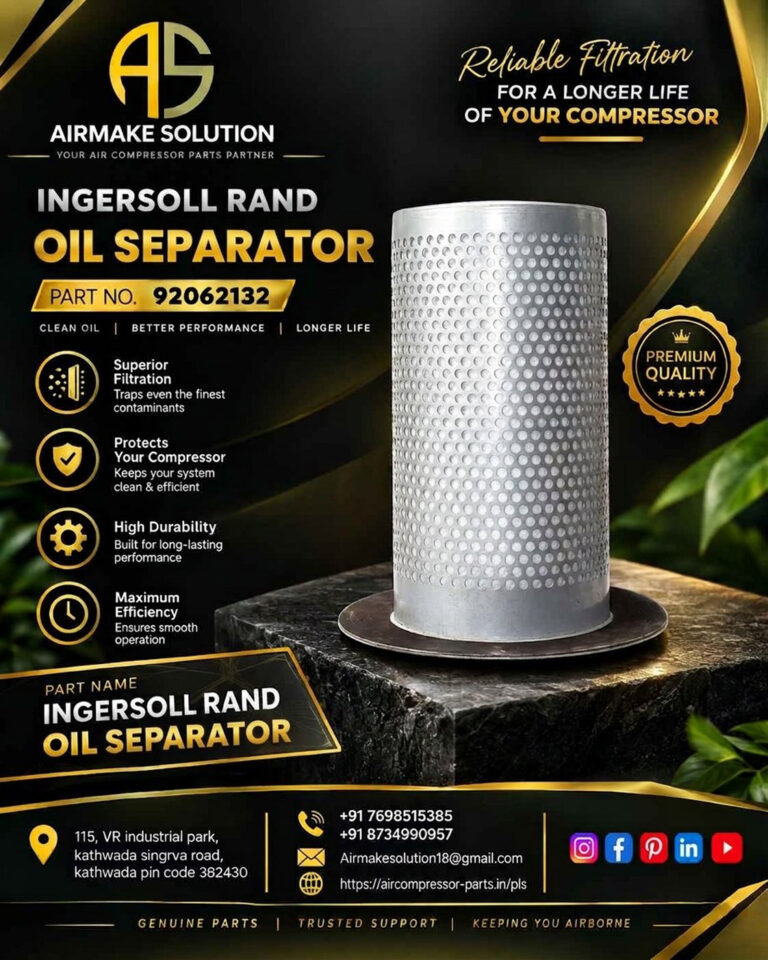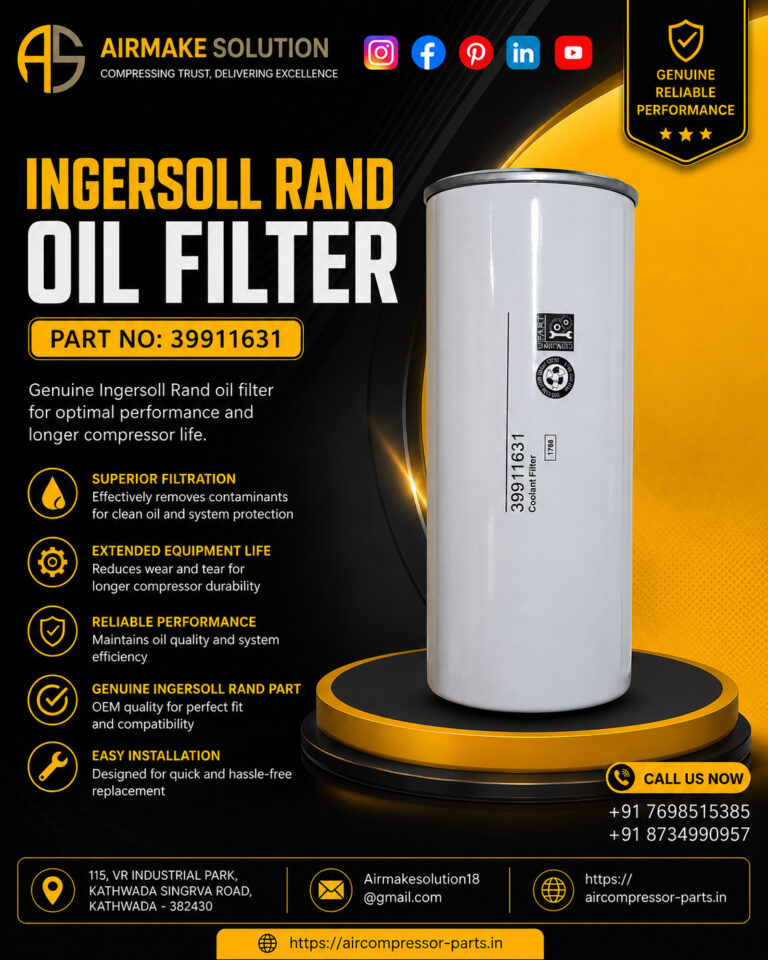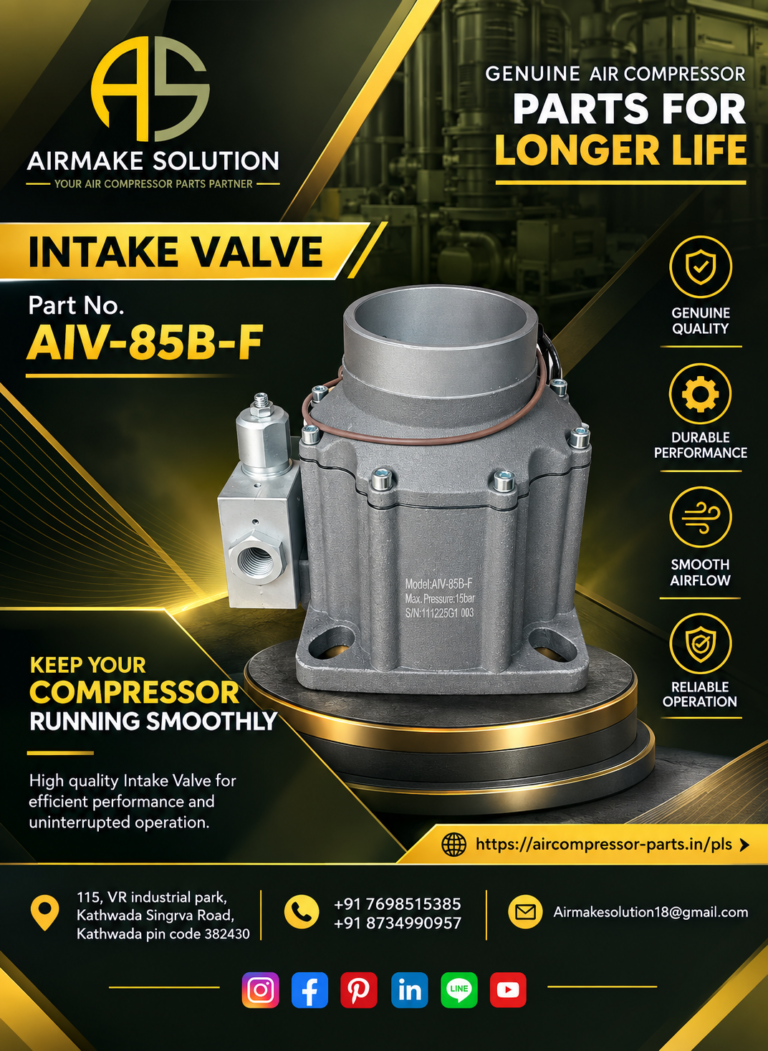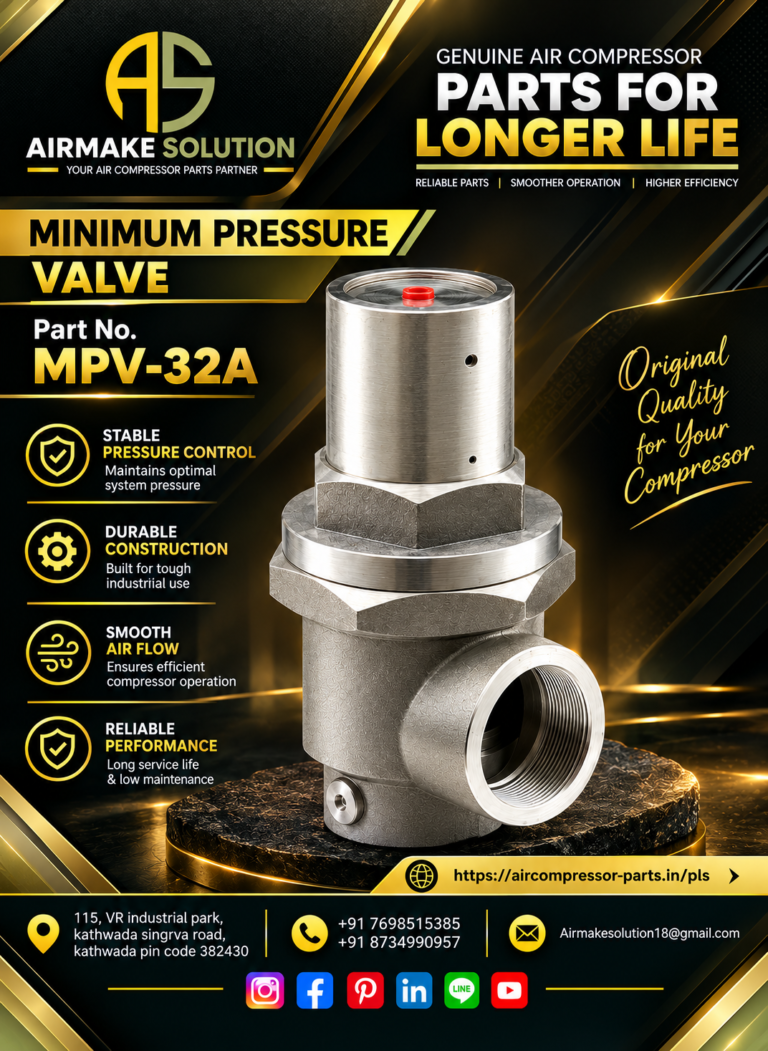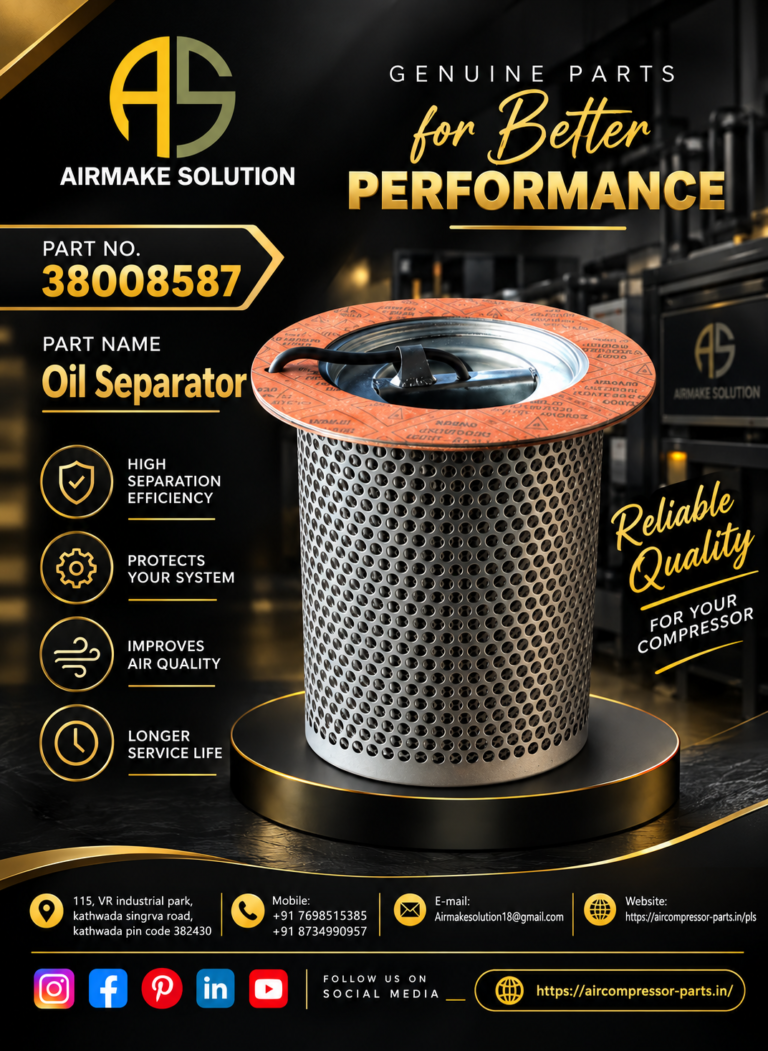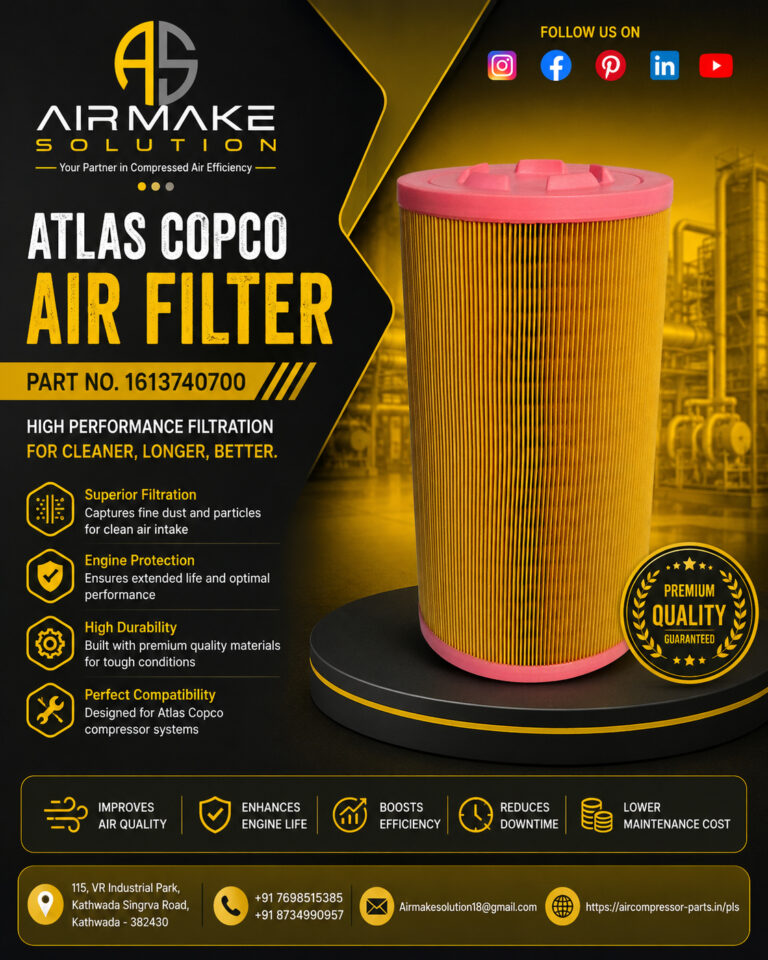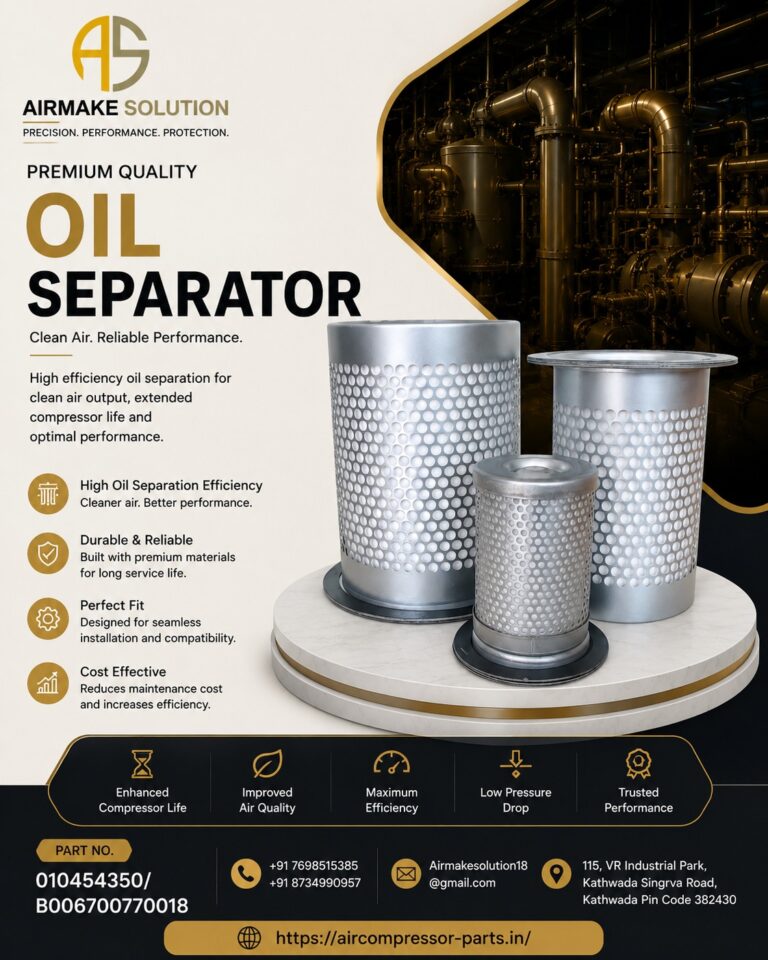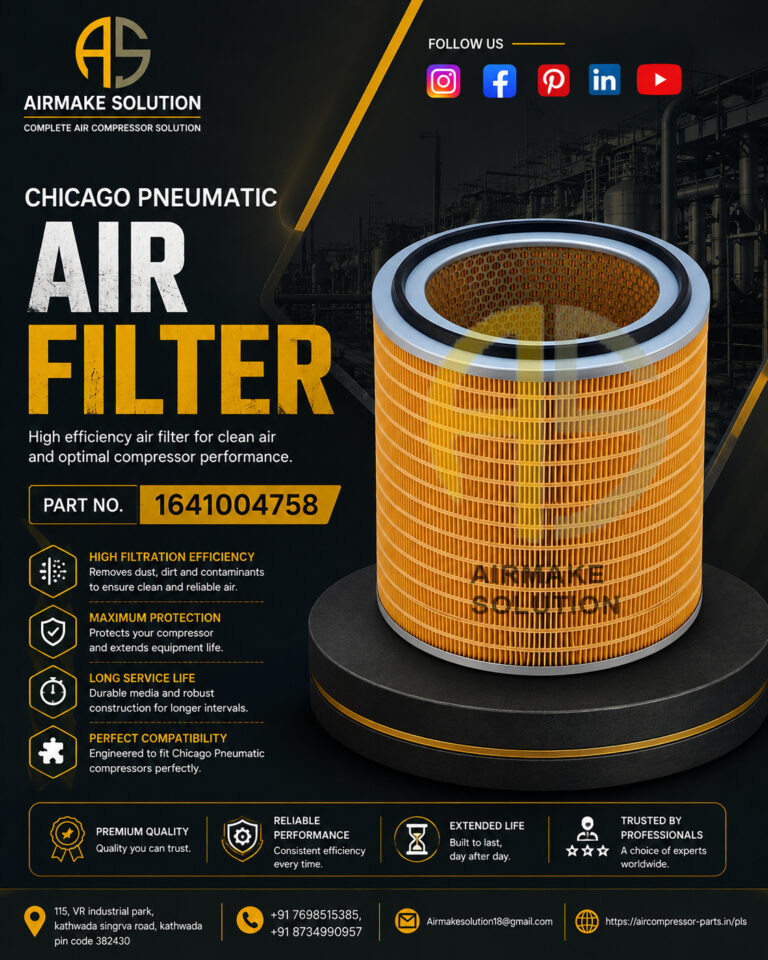
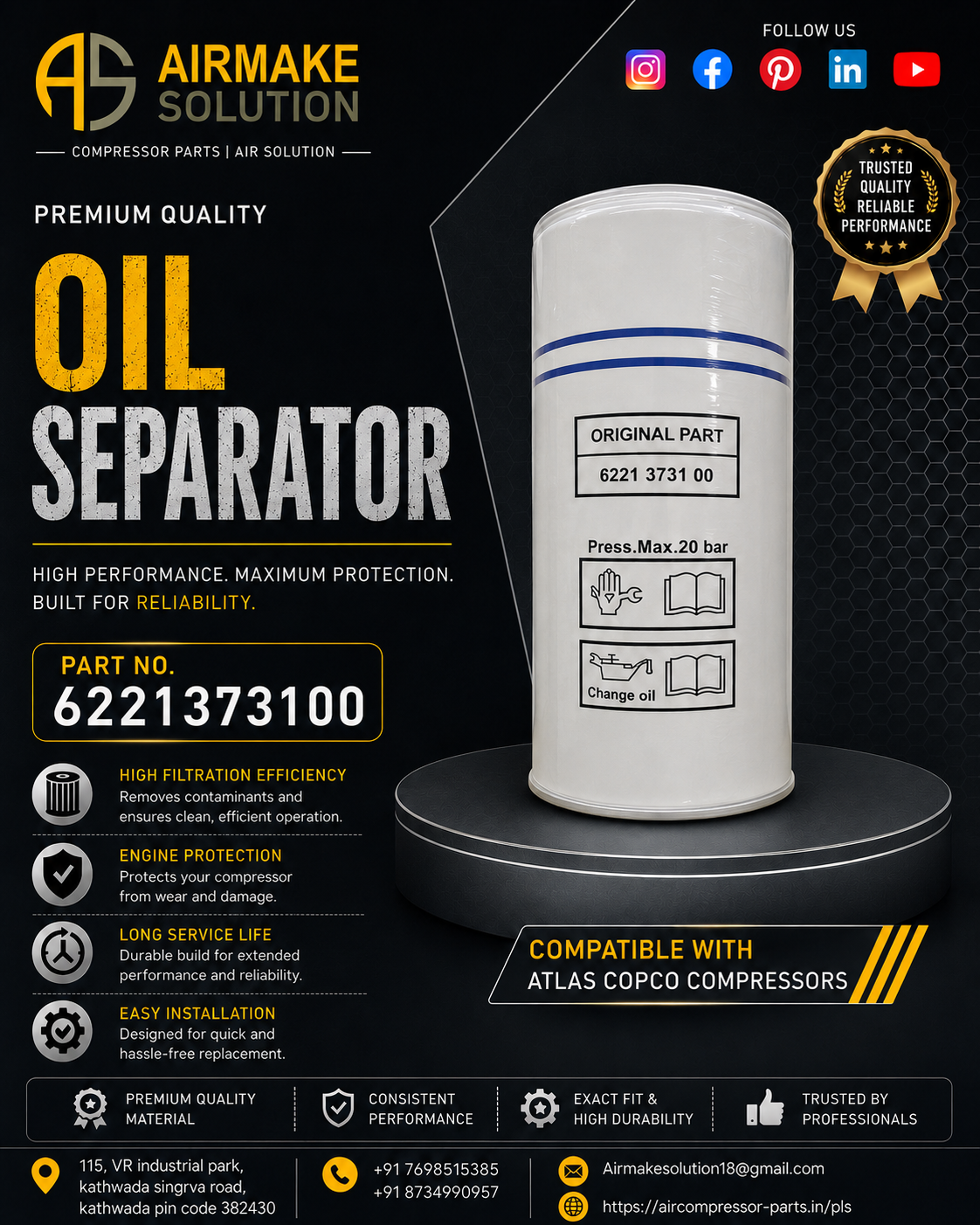
An air compressor depends on several critical components to deliver clean compressed air and maintain reliable performance. Among these components, the oil separator plays an essential role in oil-injected screw compressors. The Oil Separator 6221373100 is designed to support efficient oil separation, reduce oil carryover, protect downstream equipment, and help maintain the performance of the compressed air system.
For industries that depend on continuous compressed air, choosing the correct replacement separator can help reduce maintenance problems and protect valuable compressor components. A high-quality oil separator supports clean air delivery while allowing the compressor’s lubrication system to operate efficiently.
The Atlas Copco Oil Separator 6221373100 is commonly used as a replacement component for compatible compressor applications. Before installation, users should always verify the part number, compressor model, dimensions, operating specifications, and compatibility requirements.
This guide explains the function, benefits, maintenance requirements, and importance of the Oil Separator 6221373100 for industrial air compressor systems.
What Is an Oil Separator in an Air Compressor?
An oil separator is a filtration component used in oil-injected rotary screw air compressors. During compression, the compressor mixes air and lubricating oil inside the airend. The oil performs several important functions, including:
- Lubricating internal components
- Removing heat from the compression process
- Sealing internal clearances
- Supporting efficient compressor operation
After compression, the mixture contains compressed air and oil. The system must separate most of the lubricating oil from the compressed air before the air travels through the downstream piping and equipment.
The oil separator performs this important task by helping remove fine oil particles from the compressed air. The separated oil returns to the compressor lubrication circuit, while cleaner compressed air continues through the system.
The Oil Separator 6221373100 therefore supports both compressor protection and compressed air quality.
How the Oil Separator 6221373100 Supports Compressor Performance
The oil separator works as part of the compressor’s air and oil management system. Compressed air carrying oil particles enters the separation area, where the separator media helps capture and separate fine oil droplets.
The separated oil can then return to the compressor system according to the machine’s design, while the compressed air moves toward the minimum pressure valve, aftercooler, filters, dryer, or distribution network.
A properly functioning oil separator helps the compressor:
- Reduce oil carryover
- Maintain cleaner compressed air
- Support efficient oil circulation
- Protect downstream equipment
- Reduce unnecessary oil consumption
- Maintain stable compressor performance
When the separator operates efficiently, the compressor can maintain better control over the air-oil mixture.
Reduce Oil Carryover with an Efficient Separator
Oil carryover is one of the major concerns in oil-injected air compressor systems. Excess oil in the compressed air can create problems throughout the entire production process.
Oil carryover may affect:
- Pneumatic tools
- Automation systems
- Air-operated machinery
- Air dryers
- Downstream filters
- Production equipment
- Industrial pipelines
In sensitive applications, oil contamination can also affect product quality.
A properly selected and maintained Oil Separator 6221373100 helps reduce the amount of oil that escapes with the compressed air. This supports cleaner operation and helps protect equipment located downstream from the compressor.
However, users should remember that an oil separator is only one part of the complete compressed air treatment system. Applications that require very high air purity may also need additional filtration and air treatment equipment.
Support Better Compressor Lubrication
Compressor oil performs a critical function inside an oil-injected screw compressor. The system must circulate the correct amount of oil through the airend and other internal components.
An efficient oil separator helps recover oil from the compressed air and supports its return to the lubrication system.
This process can help:
- Reduce unnecessary oil loss
- Support proper lubrication
- Maintain oil circulation
- Protect internal compressor components
- Reduce the need for frequent oil top-ups
When excessive oil leaves the compressor with the compressed air, the lubrication system may lose oil more quickly. This can increase operating costs and create maintenance concerns.
Installing the correct oil separator and maintaining it according to the compressor manufacturer’s recommendations can help support reliable lubrication management.
Protect Downstream Equipment
Compressed air systems often include expensive equipment after the compressor. This may include dryers, filters, control systems, pneumatic cylinders, production machines, and specialized industrial equipment.
Excess oil contamination can affect the performance and reliability of these components.
The Oil Separator 6221373100 helps reduce oil particles before the compressed air enters the downstream system. Cleaner air can help protect:
- Pneumatic valves
- Cylinders
- Air tools
- Instrumentation
- Automation equipment
- Air treatment systems
By controlling oil carryover at the compressor stage, the separator supports a cleaner and more reliable compressed air system.
Improve Air Quality for Industrial Applications
Compressed air quality directly affects industrial productivity. Many businesses depend on compressed air for continuous production, and contaminated air can create operational problems.
A high-quality oil separator helps improve air quality by reducing oil aerosol and liquid oil carryover from the compressor.
Industries may use compressed air for:
- Manufacturing
- Automotive production
- Packaging
- Textile operations
- Engineering
- Metalworking
- General industrial applications
- Pneumatic automation
The required air quality depends on the application. While the oil separator helps control oil carryover, additional filters may be required when applications need specific air purity levels.
Businesses should always evaluate their compressed air quality requirements and select the correct filtration and treatment system.
Maintain Efficient Airflow and System Performance
Airflow resistance can affect the efficiency of an air compressor. A separator that becomes heavily contaminated may create excessive pressure drop.
Higher pressure drop can force the compressor to work harder to deliver the required air pressure. This may increase energy consumption and reduce overall system efficiency.
Regular maintenance helps prevent excessive separator restriction.
A properly maintained oil separator can support:
- Efficient airflow
- Stable pressure
- Reduced system resistance
- Better compressor performance
- Improved operational reliability
Monitoring compressor operating conditions can help maintenance teams identify separator-related problems before they create serious equipment issues.
Recognize the Signs of a Worn Oil Separator
An oil separator does not last forever. Over time, contamination and operating conditions can reduce its effectiveness.
Common signs that may indicate a separator requires inspection include:
- Increased oil consumption
- Excessive oil in compressed air
- Higher pressure drop
- Reduced compressor efficiency
- Oil leakage from downstream components
- Increased maintenance requirements
- Reduced air system performance
These symptoms can also result from other compressor problems. For this reason, maintenance personnel should inspect the complete air and oil system before replacing components.
Always follow the compressor manufacturer’s maintenance recommendations.
Install the Correct Oil Separator for Your Compressor
Correct installation is essential for separator performance. Using an incorrect part may cause fitting problems, poor sealing, excessive pressure drop, or reduced filtration efficiency.
Before purchasing an Oil Separator 6221373100, verify:
- Exact part number
- Compressor model
- Separator dimensions
- Installation arrangement
- Operating pressure
- Compatibility requirements
Installation should be performed by trained technicians or qualified maintenance personnel.
During replacement, technicians should also inspect related components such as:
- Seals and gaskets
- Scavenge lines
- Oil return systems
- Air-oil receiver components
- Minimum pressure valve
- Compressor oil condition
A complete inspection can help identify the actual cause of oil carryover or compressor performance problems.
Extend Separator Life with Proper Maintenance
Maintenance practices have a direct effect on separator service life.
To support reliable operation:
Use Recommended Compressor Oil
Always use the correct lubricant recommended for the compressor. Incorrect or incompatible oil can affect separator performance and service life.
Replace Air Filters on Time
A dirty intake air filter allows more contamination to enter the compressor. Excessive dust and contaminants can affect the oil and increase stress on internal components.
Monitor Operating Temperature
High operating temperatures can affect compressor oil and separator materials. Regular temperature monitoring helps identify cooling or ventilation problems.
Check for Oil Contamination
Contaminated oil can reduce compressor performance and may contribute to separator problems.
Follow Scheduled Maintenance
Replace filters and separators according to operating conditions and manufacturer recommendations rather than waiting for a major failure.
Choose a Reliable Replacement Oil Separator
Industrial compressor components must perform under demanding operating conditions. When selecting a replacement separator, quality and compatibility should remain important priorities.
A reliable replacement solution should provide:
- Suitable filtration performance
- Strong construction
- Correct fitment
- Efficient airflow characteristics
- Reliable sealing
- Compatibility with the compressor system
The lowest-cost component may not always provide the best long-term value. Poor-quality or incorrect separators can contribute to oil carryover, increased pressure drop, frequent replacement, and unnecessary downtime.
Choosing the correct separator helps protect both the compressor and the wider compressed air system.
Reduce Downtime with Preventive Maintenance
Unexpected compressor failure can interrupt production and increase operating costs. Preventive maintenance helps businesses reduce the risk of sudden component failure.
Maintaining spare parts such as oil separators, oil filters, air filters, and service kits can help maintenance teams complete scheduled servicing efficiently.
A preventive maintenance strategy can help:
- Reduce unplanned downtime
- Improve equipment reliability
- Support consistent production
- Protect major compressor components
- Improve maintenance planning
The Oil Separator 6221373100 can form an important part of a complete compressor maintenance program when it matches the requirements of the installed compressor.
Why Choose Airmake Solution for Compressor Parts?
Airmake Solution supplies compressor parts and accessories for industrial air compressor maintenance requirements. Selecting the correct part number and verifying compatibility can help businesses maintain reliable compressor operation.
When sourcing an oil separator, customers should focus on:
- Correct part identification
- Product compatibility
- Quality standards
- Proper installation
- Regular maintenance
For industrial maintenance teams, working with a reliable compressor parts supplier can make replacement planning easier and help reduce unnecessary equipment downtime.
Conclusion
The Oil Separator 6221373100 plays an important role in managing oil carryover and supporting efficient operation in compatible oil-injected air compressor systems. By separating oil from compressed air, it helps support cleaner air delivery, better oil circulation, downstream equipment protection, and reliable compressor performance.
Regular maintenance remains essential for achieving the best results. Monitor compressor operating conditions, replace filtration components on schedule, use the correct compressor oil, and always verify part compatibility before installation.
A well-maintained oil separation system can support improved compressor reliability, reduced oil consumption, better air quality, and lower maintenance-related downtime.
For businesses that depend on compressed air every day, selecting the correct Oil Separator 6221373100 and maintaining it properly can be an important step toward protecting their compressor investment and achieving consistent industrial performance.