Temperature control plays an important role in reliable air compressor operation. Screw compressors and other industrial compressor systems generate heat during compression, lubrication, and continuous operation. The compressor therefore needs accurate temperature monitoring to maintain suitable operating conditions and protect critical components.
The Atlas Copco Temperature Sensor 2856631304873 is designed to monitor temperature within compatible Atlas Copco air compressor systems. By providing temperature information to the compressor control system, the sensor helps operators and controllers monitor operating conditions and respond to abnormal temperature changes.
A reliable temperature sensor supports compressor protection, performance monitoring, preventive maintenance, and stable operation. When a temperature sensor becomes inaccurate or fails, the compressor controller may receive incorrect information, which can affect machine operation and protection functions.
This guide explains the purpose, benefits, applications, installation considerations, maintenance requirements, and replacement practices associated with the Atlas Copco Temperature Sensor 2856631304873.
What Is an Atlas Copco Temperature Sensor?
An air compressor temperature sensor is a sensing component that detects temperature at a specified location within the compressor system. The sensor converts temperature changes into an electrical signal that the compressor’s monitoring or control system can interpret.
The controller can use this information to monitor operating conditions and trigger appropriate warnings or protective actions when temperature conditions move outside the expected range.
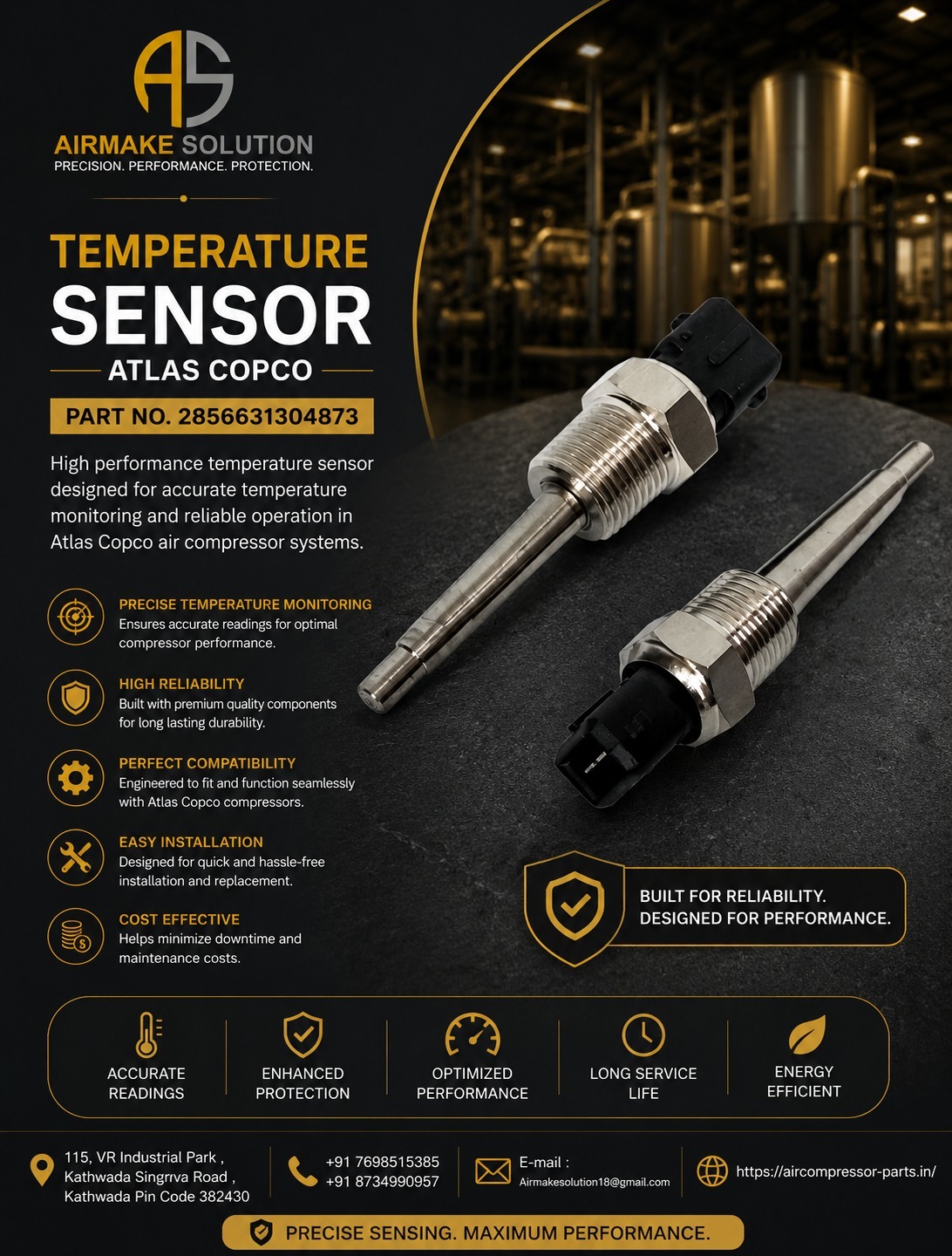
The 2856631304873 temperature sensor shown in the product presentation features a threaded metal sensing body and an electrical connector. The sensing probe is designed to make contact with the monitored area while the connector transfers the sensor signal to the compressor control circuit.
The exact application and installation position depend on the compatible compressor model.
Why Accurate Temperature Monitoring Matters
A compressor generates significant heat during operation. If the system operates outside its intended temperature range, it can experience performance problems and increased component stress.
Accurate temperature monitoring helps the compressor control system understand its thermal operating condition.
A properly functioning temperature sensor can help support:
- Accurate temperature readings
- Compressor protection
- Stable operation
- Preventive maintenance
- Fault detection
- Reliable control-system operation
- Reduced risk of temperature-related problems
The sensor does not independently control compressor temperature. Instead, it provides temperature information to the compressor’s monitoring and control system.
Key Benefits of Temperature Sensor 2856631304873
Accurate Temperature Sensing
The sensor provides temperature information to the compressor control system. Accurate sensing helps the controller monitor operating conditions effectively.
Compressor Protection
Temperature information allows the control system to identify abnormal thermal conditions and apply the programmed protection or alarm functions.
Reliable Performance
A dependable sensor supports consistent monitoring during compressor operation. This becomes particularly important when the compressor operates for long periods or under demanding industrial conditions.
Quick Replacement
A correctly specified replacement sensor can simplify maintenance and help technicians restore temperature monitoring without unnecessary downtime.
Durable Construction
The sensor shown in the product image uses a metal sensing body with a threaded mounting section and electrical connector. Proper construction helps the component withstand the operating environment when correctly installed.
Supports Preventive Maintenance
Accurate temperature information can help maintenance teams identify changes in compressor operating conditions before they develop into larger equipment problems.
How the Temperature Sensor Supports Compressor Operation
The temperature sensor works as part of the compressor’s monitoring system.
The basic operating process involves several stages:
Temperature changes → Sensor detects temperature → Electrical signal is transmitted → Compressor controller interprets the signal → Monitoring/protection response occurs
This process allows the compressor controller to monitor thermal conditions without requiring manual temperature measurement during normal operation.
When the sensor provides incorrect information, the controller may interpret the compressor’s temperature incorrectly. Therefore, maintaining a properly functioning sensor is important for reliable compressor monitoring.
Protect Your Compressor With Reliable Temperature Monitoring
Temperature-related problems can develop quickly in continuously operating compressor systems. Excessive temperature can affect oil condition, lubrication, seals, bearings, and other components depending on the compressor design.
The temperature sensor provides an important source of information for identifying thermal conditions.
When the sensor operates correctly, the control system can monitor temperature and respond according to its programmed operating logic.
This makes the temperature sensor an important component of an overall compressor protection strategy.
Signs of a Faulty Temperature Sensor
A damaged or malfunctioning temperature sensor can create different symptoms depending on the compressor and control system.
Common signs may include:
Incorrect Temperature Reading
The displayed temperature may not correspond with the actual operating condition.
Temperature Alarm
The compressor may generate a temperature-related warning or alarm.
Unexpected Compressor Shutdown
A control system may stop the compressor if it receives a signal indicating an unsafe temperature condition.
Unstable Temperature Indication
The displayed temperature may fluctuate unexpectedly or show inconsistent values.
Sensor Fault Code
Some compressor controllers may identify electrical or sensor-related faults.
Starting or Operating Problems
A faulty sensor signal can affect compressor control logic depending on the machine configuration.
Always diagnose the complete system before replacing the sensor because wiring, connectors, controller inputs, and other components can also cause sensor-related symptoms.
Applications of Atlas Copco Temperature Sensor 2856631304873
The 2856631304873 temperature sensor is intended for compatible Atlas Copco compressor applications.
Industrial air compressors use temperature sensing at different locations depending on their design. A sensor may monitor a temperature associated with areas such as:
- Compressor oil
- Air or discharge temperature
- Lubrication system
- Compressor element
- Cooling circuit
- Other monitored thermal locations
The exact application must be confirmed using the compressor’s model, serial number, existing sensor information, and applicable parts documentation.
Choose the Correct Replacement Sensor
Selecting the correct temperature sensor requires more than comparing the appearance of two components.
Before ordering 2856631304873, check:
- Part number
- Compressor brand
- Compressor model
- Compressor serial number
- Existing sensor specification
- Thread configuration
- Connector configuration
- Sensor application
- Electrical characteristics
- Installation location
Correct identification helps prevent installation problems and ensures that the control system receives the appropriate sensor signal.
Installation Considerations
Always follow the applicable compressor service procedure when replacing the temperature sensor.
Step 1: Shut Down the Compressor
Switch off the compressor and follow the required isolation and safety procedures.
Step 2: Allow the System to Cool
Do not remove a temperature sensor from a hot pressurized system. Allow the equipment to reach a safe temperature.
Step 3: Isolate the Relevant System
Follow the manufacturer’s procedure for relieving pressure or isolating the relevant circuit before removing the sensor.
Step 4: Disconnect the Electrical Connector
Remove the connector carefully without pulling or damaging the wiring.
Step 5: Remove the Existing Sensor
Use the correct tool and avoid damaging the threaded mounting point.
Step 6: Inspect the Mounting Area
Check the threads, sealing surface, connector, and surrounding components.
Step 7: Install the Replacement
Install the new sensor according to the applicable service instructions and specified tightening requirements.
Step 8: Reconnect the Electrical Connection
Make sure the connector is properly seated and the wiring remains secure.
Step 9: Test the Compressor
Restart the system according to the manufacturer’s procedure and confirm that the temperature reading and monitoring functions operate normally.
Avoid Common Temperature Sensor Replacement Mistakes
Installing an Incorrect Sensor
A visually similar sensor may have different electrical characteristics or thread specifications.
Ignoring the Connector
The connector must match the compressor’s wiring system and provide a secure electrical connection.
Installing the Sensor Without Checking the Thread
Incorrect threads can damage the mounting point and create leakage or installation problems.
Overtightening the Sensor
Excessive tightening can damage the sensor or mounting area.
Reusing Damaged Wiring
Damaged wiring or connectors can create symptoms similar to a faulty sensor.
Skipping the Final Test
Always verify the temperature reading and compressor operation after replacement.
Maintain Your Temperature Sensor System
Although temperature sensors generally require limited routine maintenance, technicians should include them in compressor inspections.
Inspect the following:
- Sensor body
- Electrical connector
- Wiring
- Threaded mounting area
- Signs of corrosion
- Physical damage
- Oil or contamination around the mounting point
- Temperature readings
- Controller alarms
A clean and secure electrical connection helps maintain reliable signal transmission.
Why Preventive Maintenance Matters
Industrial compressors often operate for extended periods. Small sensor problems can become operational problems if maintenance teams ignore them.
Preventive maintenance helps identify:
- Sensor degradation
- Wiring damage
- Loose connections
- Corrosion
- Incorrect temperature readings
- Repeated temperature alarms
- Abnormal operating trends
Replacing a worn sensor at the appropriate time can help reduce unexpected downtime and maintain reliable monitoring.
Atlas Copco Temperature Sensor 2856631304873 for Industrial Reliability
Industrial compressor systems depend on accurate monitoring to maintain dependable operation. Temperature represents one of the most important operating parameters because excessive heat can affect multiple compressor components.
The Atlas Copco Temperature Sensor 2856631304873 provides temperature-sensing functionality for compatible compressor systems. Its sensing probe, threaded mounting body, and electrical connector allow it to integrate into the appropriate compressor monitoring circuit.
For maintenance teams, the correct replacement sensor can help restore accurate temperature monitoring and support the compressor’s programmed protection functions.
Improve Compressor Maintenance With Accurate Sensing
Modern compressor maintenance increasingly relies on condition monitoring. Temperature readings provide valuable information about compressor operation.
A change in normal temperature can indicate potential issues involving:
- Cooling performance
- Oil circulation
- Lubrication
- Air compression
- Operating load
- Ambient conditions
- Component condition
Technicians can use temperature trends alongside other compressor parameters to identify potential problems and schedule maintenance more effectively.
The temperature sensor therefore contributes not only to immediate monitoring but also to a broader preventive maintenance strategy.
Verify Compatibility Before Ordering
The part number shown for this product is:
Atlas Copco Temperature Sensor – 2856631304873
Because compressor configurations vary, always verify compatibility before purchase or installation. Confirm the compressor model and serial number with the supplier or applicable parts documentation.
Do not rely solely on the sensor’s appearance because different sensors can have similar shapes while using different electrical specifications or applications.
Conclusion
The Atlas Copco Temperature Sensor 2856631304873 is an important sensing component for compatible Atlas Copco air compressor systems. It provides temperature information that helps the compressor monitoring and control system track operating conditions.
Accurate temperature sensing can support compressor protection, stable operation, preventive maintenance, and reliable performance. When a sensor becomes damaged, inaccurate, or electrically faulty, replacing it with the correct specification can help restore dependable temperature monitoring.
For the best results, always verify part number 2856631304873, compressor model, serial number, connector configuration, thread specification, and application before ordering. Follow the appropriate service procedure during installation and test the compressor after replacement.