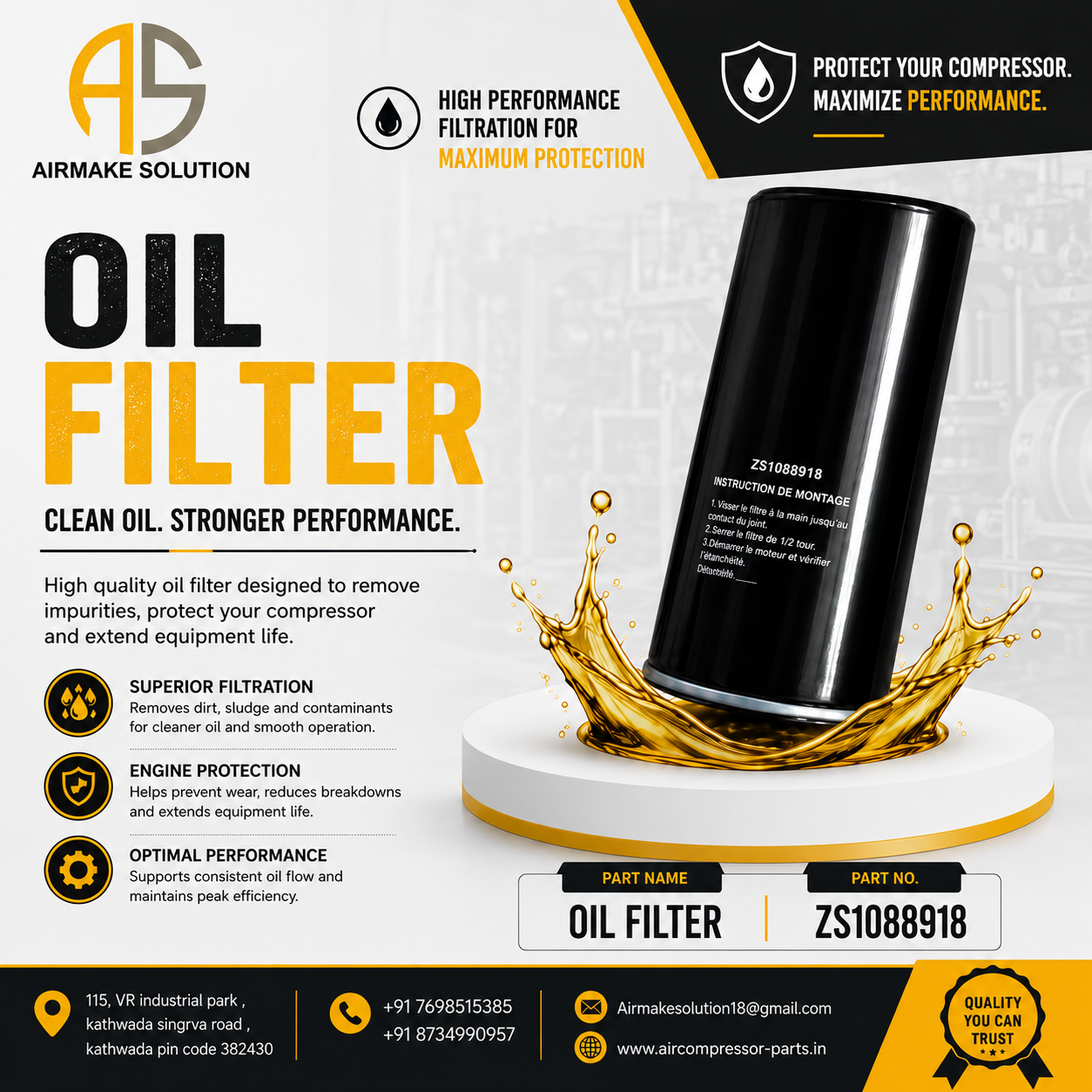
Industrial air compressors are designed to deliver reliable compressed air for manufacturing, automotive, pharmaceutical, food processing, construction, and Oil Filtration Filter engineering industries. However, the performance of any compressor depends greatly on the quality of its lubrication system. One of the most critical components in this system is the oil filter.
The phrase “Clean Oil. Stronger Performance.” perfectly summarizes the importance of a high-quality oil filter. Clean compressor oil ensures smooth operation, protects internal components from wear, reduces downtime, and maximizes compressor efficiency.
In this guide, we’ll explain everything you need to know about oil filters, including their functions, benefits, working principles, maintenance tips, and why choosing a premium-quality oil filter is essential for industrial applications.
What is an Oil Filter?
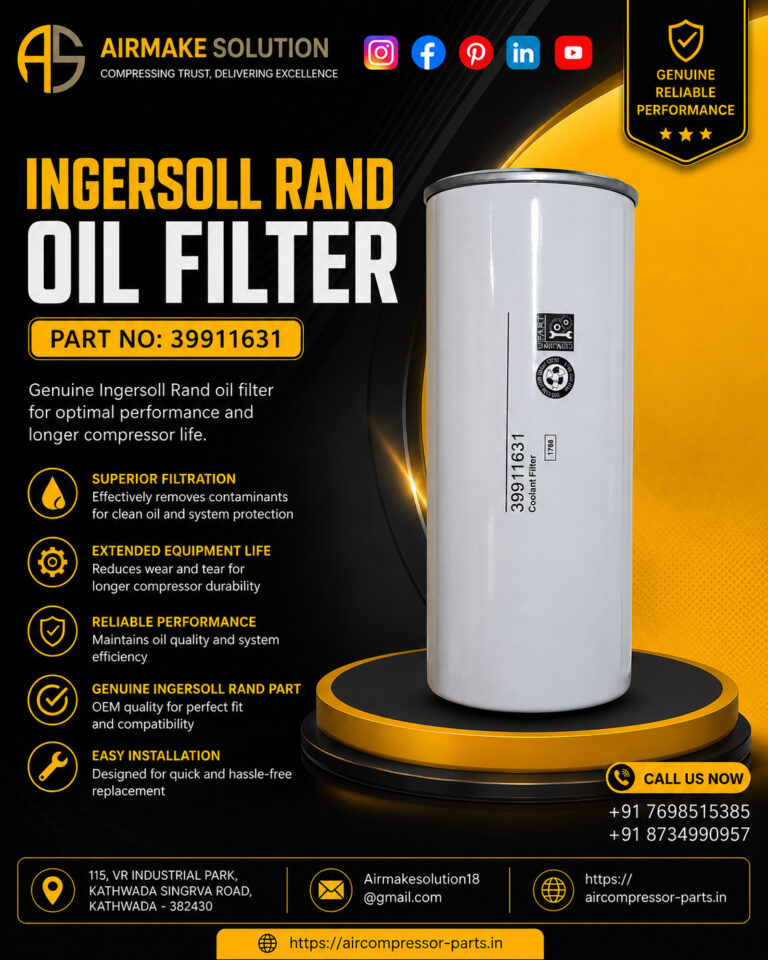
An oil filter is a filtration component designed to remove dirt, dust, carbon deposits, sludge, and metal particles from compressor lubricating oil before it circulates through the compressor.
Since compressor oil continuously lubricates moving parts, it naturally collects contaminants over time. Without proper filtration, these impurities can damage bearings, rotors, gears, seals, and other expensive components.
A quality oil filter ensures that only clean oil flows throughout the compressor, protecting critical parts and maintaining optimal performance.
Why is an Oil Filter Important?
Every industrial compressor depends on clean lubrication for efficient operation.
A premium oil filter helps by:
- Removing contaminants from compressor oil
- Preventing internal wear
- Extending compressor life
- Maintaining oil quality
- Improving cooling efficiency
- Reducing maintenance costs
- Increasing energy efficiency
- Preventing unexpected equipment failure
Without an effective oil filter, contaminated oil circulates throughout the compressor, causing gradual damage that can eventually result in costly repairs.
How Does an Oil Filter Work?
The oil filter works in a simple but highly effective process.
Step 1: Oil Circulation
The compressor pump circulates lubricating oil throughout the machine.
Step 2: Filtration
Before the oil reaches sensitive internal components, it passes through the oil filter.
The filter media captures:
- Dust particles
- Metal shavings
- Carbon deposits
- Rust
- Sludge
- Dirt
Step 3: Clean Oil Supply
Only clean, filtered oil reaches the compressor’s moving parts.
Step 4: Continuous Protection
This process repeats continuously while the compressor is operating.
The result is smoother operation, lower friction, and longer equipment life.
Major Functions of an Oil Filter
1. Removes Harmful Contaminants
Industrial environments often expose compressors to dust, moisture, and airborne particles.
The oil filter captures these contaminants before they can damage internal components.
2. Protects Bearings
Bearings require clean lubrication to minimize friction.
Dirty oil accelerates bearing wear, leading to expensive failures.
3. Prevents Rotor Damage
In rotary screw compressors, even tiny particles can scratch precision-machined rotors.
A quality oil filter helps maintain rotor efficiency.
4. Reduces Friction
Clean oil flows smoothly and creates a protective lubrication layer between moving parts.
This reduces friction and wear.
5. Controls Temperature
Lubricating oil also removes heat generated inside the compressor.
When oil remains clean, cooling performance improves significantly.
6. Extends Oil Life
By continuously removing contaminants, the oil filter helps compressor oil last longer before replacement.
7. Improves Compressor Efficiency
A clean lubrication system allows the compressor to operate at peak efficiency with lower power consumption.
Benefits of Using a High-Quality Oil Filter
Better Compressor Performance
Clean oil helps the compressor maintain stable pressure, efficient airflow, and consistent output.
Longer Equipment Life
Internal parts remain protected from wear, increasing overall compressor lifespan.
Reduced Maintenance Costs
Preventive filtration minimizes expensive repairs and replacement of major components.
Lower Energy Consumption
Less friction means the compressor requires less energy to operate.
Improved Reliability
A quality oil filter helps prevent unexpected breakdowns and production downtime.
Better Oil Quality
Contaminants are continuously removed, preserving lubricant performance.
Increased Productivity
Reliable compressor performance supports uninterrupted industrial operations.
Signs Your Oil Filter Needs Replacement
Like every maintenance component, oil filters have a limited service life.
Watch for these common warning signs:
- Increased oil pressure
- Dirty or dark compressor oil
- Reduced compressor performance
- Unusual operating noise
- High operating temperature
- Frequent maintenance alerts
- Slow pressure build-up
- Increased energy consumption
Replacing the oil filter at the recommended interval prevents major compressor problems.
Applications of Oil Filters
Oil filters are widely used in numerous industrial sectors, including:
Manufacturing Plants
Ensuring reliable compressed air for production machinery.
Automotive Industry
Supporting painting systems, pneumatic tools, and assembly lines.
Textile Industry
Providing continuous compressor protection.
Pharmaceutical Industry
Maintaining clean and efficient compressor operation.
Food & Beverage Industry
Supporting hygienic compressed air systems.
Construction Industry
Powering heavy-duty pneumatic equipment.
Engineering Workshops
Protecting compressors used in fabrication and machining.
Packaging Industry
Maintaining uninterrupted production processes.
Choosing the Right Oil Filter
Selecting the correct oil filter is essential for maximum performance.
Consider the following factors:
Compatibility
Choose a filter designed specifically for your compressor model.
Filtration Efficiency
Higher filtration efficiency removes smaller contaminants.
Build Quality
Look for corrosion-resistant housing and durable filter media.
Pressure Rating
Ensure the filter can withstand your compressor’s operating pressure.
Flow Capacity
Proper oil flow is essential for effective lubrication.
OEM Standards
Use OEM-quality or equivalent replacement filters for reliable performance.
Oil Filter Maintenance Tips
Proper maintenance extends both oil filter and compressor life.
Replace on Schedule
Always follow the manufacturer’s recommended replacement interval.
Use Quality Compressor Oil
Premium lubricants reduce contamination buildup.
Inspect During Service
Check for leaks, clogging, or physical damage.
Replace with Genuine Parts
High-quality replacement filters offer better durability and filtration performance.
Monitor Oil Condition
Regular oil analysis helps identify contamination before it causes damage.
Keep the Compressor Clean
Reducing external dust minimizes contamination entering the lubrication system.
Common Problems Caused by a Dirty Oil Filter
Ignoring oil filter maintenance can lead to:
- Poor lubrication
- Increased friction
- Bearing failure
- Rotor damage
- High operating temperatures
- Oil degradation
- Reduced compressor efficiency
- Frequent shutdowns
- Costly repairs
- Shortened compressor life
Routine filter replacement is a simple, cost-effective way to avoid these issues.
Why Buy Quality Oil Filters?
Investing in premium oil filters provides long-term benefits, including:
- Superior filtration efficiency
- Longer service life
- Reliable performance
- Lower maintenance costs
- Enhanced equipment protection
- Better energy savings
- Improved compressor reliability
Choosing trusted suppliers ensures consistent quality and compatibility with your compressor system.
Conclusion
The oil filter is one of the most important components in any industrial air compressor. Its primary role is to keep lubricating oil free from contaminants, ensuring smooth operation, reduced wear, and maximum equipment reliability.
Following the principle of “Clean Oil. Stronger Performance.”, regular oil filter replacement helps improve efficiency, reduce maintenance costs, extend compressor life, and prevent costly breakdowns. Whether you operate a manufacturing plant, automotive workshop, pharmaceutical facility, or construction site, investing in a high-quality oil filter is essential for maintaining optimal compressor performance.
By selecting the right oil filter and following a proper maintenance schedule, you can ensure your air compressor delivers dependable, energy-efficient performance for years to come.