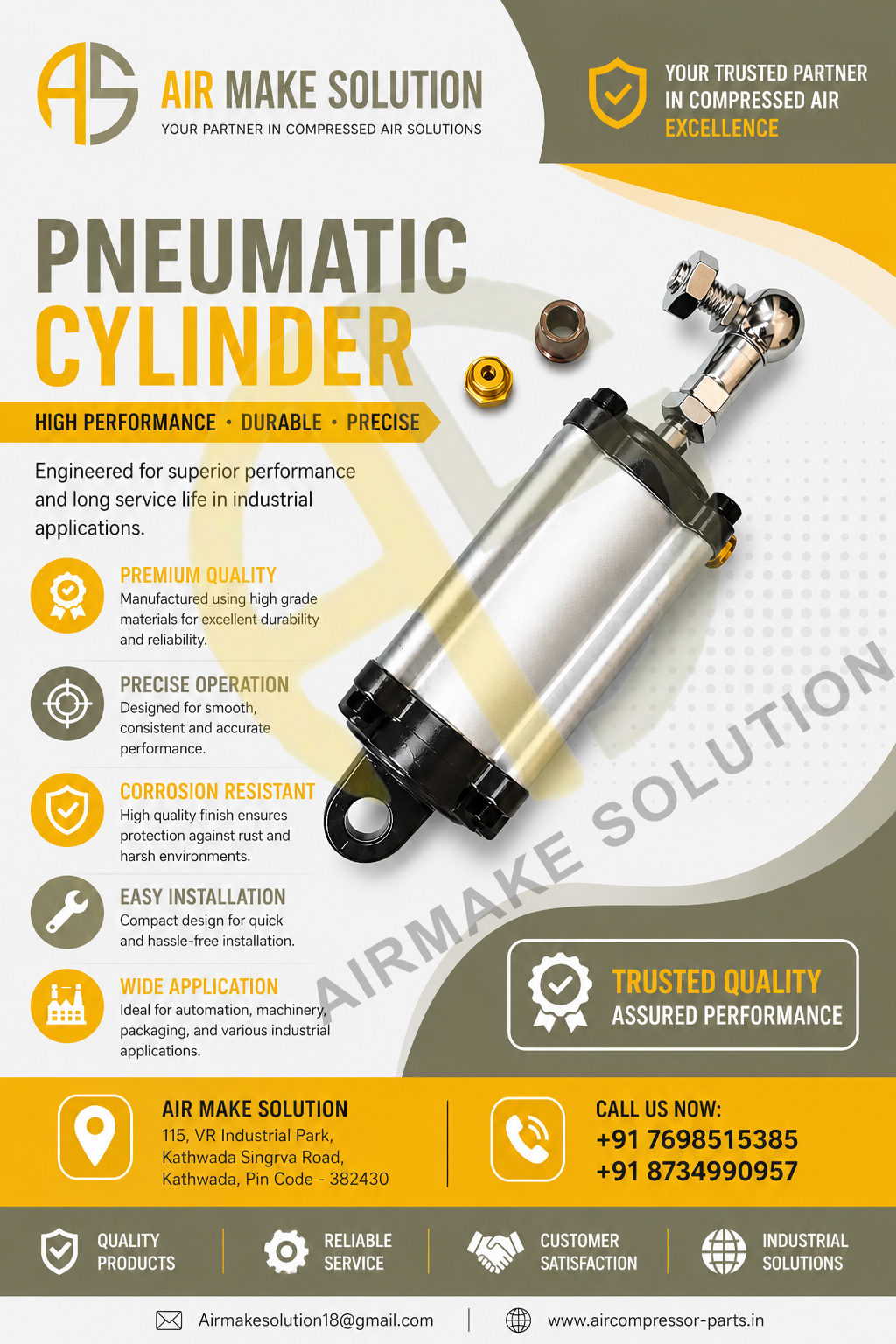
A pneumatic cylinder is one of the most essential components in modern industrial automation. Designed to convert compressed air into linear motion, pneumatic cylinders deliver high performance, exceptional reliability, and efficient operation across a wide range of industries. From manufacturing and packaging to automotive and food processing, these air-powered actuators help improve productivity while reducing maintenance costs.
High-performance pneumatic cylinders are engineered to withstand continuous operation in demanding environments. Their robust construction, fast response time, and precise movement make them the preferred choice for automation systems that require consistent and PNEUMATIC CYLINDER HIGH PERFORMANCE.
This guide explores everything you need to know about high-performance pneumatic cylinders, including their working principle, benefits, applications, maintenance tips, and how to choose the right cylinder for your industrial needs.
What is a Pneumatic Cylinder?
A pneumatic cylinder, also known as an air cylinder, is a mechanical actuator that converts the energy of compressed air into straight-line motion. This movement is used to push, pull, lift, clamp, or position objects in automated machinery.
Unlike hydraulic systems that use oil, pneumatic cylinders operate using clean compressed air, making them environmentally friendly and ideal for industries requiring clean operations, such as food processing and pharmaceuticals.
Why Choose a High-Performance Pneumatic Cylinder?
Industrial operations demand equipment that can deliver reliable performance over long production cycles. High-performance pneumatic cylinders are specifically designed to provide smooth, accurate, and efficient motion even under challenging operating conditions.
Key Benefits
1. Fast Operating Speed
Compressed air allows pneumatic cylinders to extend and retract quickly, helping increase machine productivity and reduce cycle times.
2. Reliable Performance
High-quality cylinders provide consistent force throughout every operation, ensuring dependable machine performance.
3. Energy Efficient
Modern pneumatic cylinders are designed to optimize compressed air usage, reducing energy consumption and operating costs.
4. Long Service Life
Premium materials and precision engineering ensure years of reliable service with minimal wear.
5. Low Maintenance
Simple construction means fewer moving parts, resulting in reduced maintenance requirements and lower downtime.
How Does a Pneumatic Cylinder Work?
The working principle is straightforward.
Compressed air enters the cylinder through an air port and pushes the piston inside the cylinder barrel. As the piston moves, the attached piston rod creates linear motion that performs mechanical work.
In a double-acting cylinder, compressed air is supplied alternately to both sides of the piston, allowing controlled extension and retraction.
This simple yet effective mechanism provides smooth, reliable, and repeatable motion.
Main Components of a Pneumatic Cylinder
Understanding the major components helps ensure proper selection and maintenance.
Cylinder Barrel
The housing where the piston moves during operation.
Piston
The internal component that converts air pressure into mechanical force.
Piston Rod
Transfers the generated force to the external application.
End Caps
Seal both ends of the cylinder and support internal components.
Seals
Prevent compressed air leakage while maintaining efficiency.
Air Ports
Allow compressed air to enter and exit the cylinder.
Guide Bushings
Reduce friction and improve rod alignment during movement.
Types of Pneumatic Cylinders
Different industrial applications require different cylinder designs.
Single-Acting Pneumatic Cylinder
Uses compressed air in one direction with spring return.
Ideal for:
- Clamping
- Lifting
- Light-duty operations
Double-Acting Pneumatic Cylinder
Uses compressed air for both extension and retraction.
Suitable for:
- Industrial automation
- Material handling
- Assembly lines
- Packaging equipment
Compact Pneumatic Cylinder
Designed for installations where space is limited.
Applications include:
- Robotics
- Electronics manufacturing
- Medical equipment
Guided Cylinder
Provides improved stability and accurate movement.
Commonly used in:
- Pick-and-place systems
- Precision assembly
- Automated production lines
Rodless Cylinder
Ideal for long stroke applications while saving installation space.
Used in:
- Conveyor systems
- Automated transfer systems
- Material handling equipment
Industrial Applications
High-performance pneumatic cylinders are widely used in numerous industries Industrial Pneumatic Cylinde.
Manufacturing
- Machine automation
- Press operations
- Production equipment
Automotive
- Assembly lines
- Welding fixtures
- Robotic systems
Food Processing
- Packaging machines
- Conveyor systems
- Bottle handling
Pharmaceutical
- Cleanroom automation
- Filling equipment
- Packaging lines
Textile Industry
- Fabric handling
- Cutting machines
- Automatic sewing systems
Printing Industry
- Paper feeding
- Printing presses
- Stacking equipment
Packaging Industry
- Carton sealing
- Labeling
- Product sorting
Advantages of High-Performance Pneumatic Cylinders
Choosing premium pneumatic cylinders provides several operational advantages.
Increased Productivity
Fast operation reduces production cycle times.
Improved Accuracy
Smooth movement ensures precise positioning.
Cost-Effective Solution
Affordable installation and low operating costs make pneumatic systems highly economical.
Safe Operation
Compressed air eliminates the risks associated with hydraulic oil leaks.
Environmentally Friendly
Clean air operation supports environmentally responsible manufacturing.
Reliable Continuous Operation
Designed for high-cycle industrial applications.
Easy Installation
Multiple mounting options simplify machine integration.
Factors to Consider When Choosing a Pneumatic Cylinder
Selecting the correct pneumatic cylinder improves system performance and longevity.
Consider the following:
- Bore diameter
- Stroke length
- Operating pressure
- Required force
- Mounting style
- Load weight
- Operating temperature
- Speed requirements
- Working environment
- Air quality
Consulting an experienced supplier helps ensure the best selection for your application.
Maintenance Tips
Proper maintenance maximizes performance and service life.
Inspect Regularly
Check for air leaks, loose fittings, and external damage.
Maintain Clean Air Supply
Install air filters and moisture separators to prevent contamination.
Replace Seals
Worn seals can reduce efficiency and cause pressure loss.
Monitor Operating Pressure
Always operate within the manufacturer’s recommended pressure range.
Keep the Piston Rod Clean
Prevent dust, dirt, and corrosion from damaging the rod surface.
Lubricate When Required
Follow manufacturer guidelines for lubrication to reduce wear.
Signs Your Pneumatic Cylinder Needs Replacement
Replace your pneumatic cylinder if you notice:
- Reduced operating speed
- Air leakage
- Uneven movement
- Damaged piston rod
- Internal seal failure
- Excessive vibration
- Reduced output force
- Frequent maintenance issues
Replacing worn cylinders before failure minimizes costly downtime and improves production efficiency.
Why Invest in High-Performance Pneumatic Cylinders?
High-performance pneumatic cylinders are designed for demanding industrial environments where reliability and productivity are critical. Their advanced engineering provides:
- Faster machine operation
- Longer equipment life
- Better energy efficiency
- Lower maintenance costs
- Reduced downtime
- Improved operational safety
- Consistent motion control
- Higher production output
Whether you operate a manufacturing plant, packaging facility, or automated production line, investing in premium pneumatic cylinders ensures dependable performance and long-term value Industrial Pneumatic Cylinde .
Conclusion
A Pneumatic Cylinder – High Performance solution is essential for businesses seeking efficient, reliable, and cost-effective industrial automation. These air-powered actuators provide fast response times, consistent force, and smooth linear motion while requiring minimal maintenance.
From automotive and packaging industries to pharmaceuticals and food processing, high-performance pneumatic cylinders deliver the reliability needed to keep production running smoothly. By selecting the right cylinder and maintaining it properly, manufacturers can increase productivity, reduce operating costs, and achieve superior automation performance.