Everything You Need to Know About Screw Air Compressors
Industrial operations depend heavily on compressed air to power machinery, automate production processes, and improve overall productivity. Among all compressed air technologies, industrial screw air compressors have become the preferred choice because of their energy efficiency, reliability, and ability to deliver a continuous supply of compressed air.
Whether you operate a manufacturing plant, textile unit, pharmaceutical company, food processing facility, or automotive workshop, choosing the right screw air compressor can significantly reduce operating costs while increasing productivity.
In this comprehensive guide, you’ll learn everything about industrial screw air compressors, including their working principles, advantages, applications, maintenance practices, essential spare parts, and tips for selecting the best compressor for your business.
What is an Industrial Screw Air Compressor?
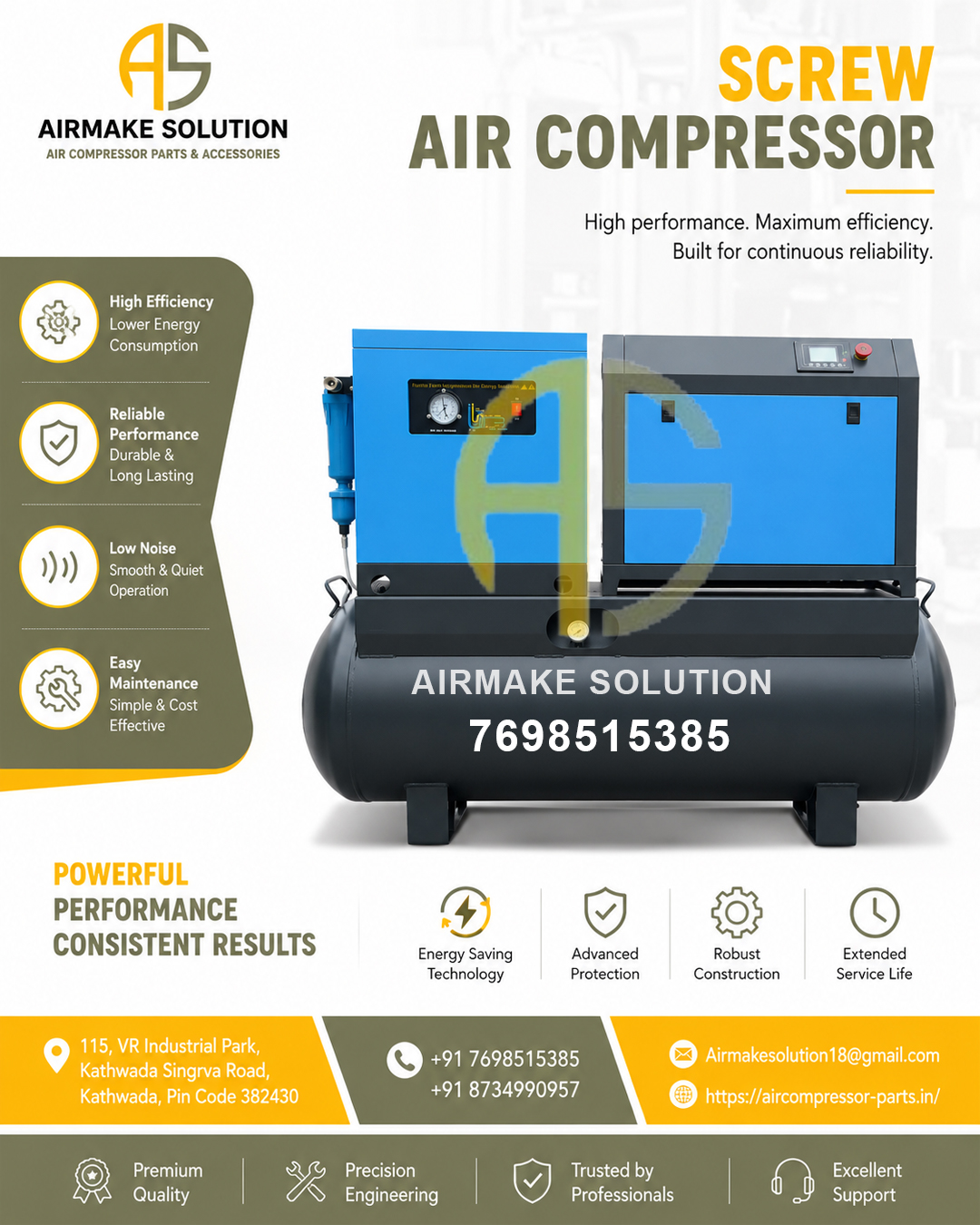
An industrial screw air compressor is a positive displacement compressor that uses two interlocking helical rotors—commonly known as the male rotor and female rotor—to compress air continuously.
Unlike reciprocating compressors, screw compressors deliver a constant airflow with minimal vibration and lower noise levels. They are designed to operate continuously, making them ideal for industries with high compressed air demand.
Because of their advanced engineering and energy-efficient operation, screw air compressors are widely used across industrial sectors worldwide.
How Does a Screw Air Compressor Work?
The working principle of a screw air compressor is simple yet highly efficient.
Air Intake
Ambient air enters the compressor through an intake filter that removes dust and contaminants.
Compression
The air moves into the compression chamber where two rotating screw rotors trap and compress the air as the space between them decreases.
Oil Injection
In oil-injected screw compressors, compressor oil lubricates the rotors, seals the compression chamber, and dissipates heat generated during compression.
Air-Oil Separation
The compressed air and oil mixture enters the air-oil separator, where advanced filtration removes oil from the compressed air.
Cooling
The oil is cooled and recirculated back into the compressor while clean compressed air moves to the air receiver or distribution system.
This continuous process delivers a reliable supply of compressed air with high efficiency.
Major Components of an Industrial Screw Air Compressor
Understanding the main components helps ensure proper maintenance and longer equipment life.
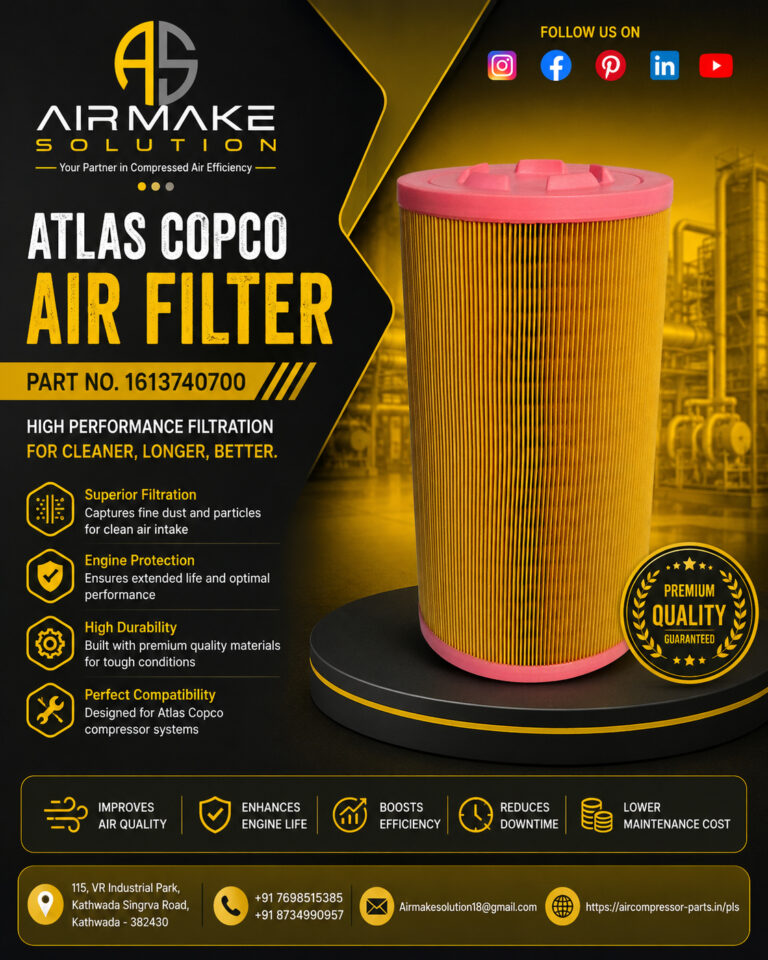
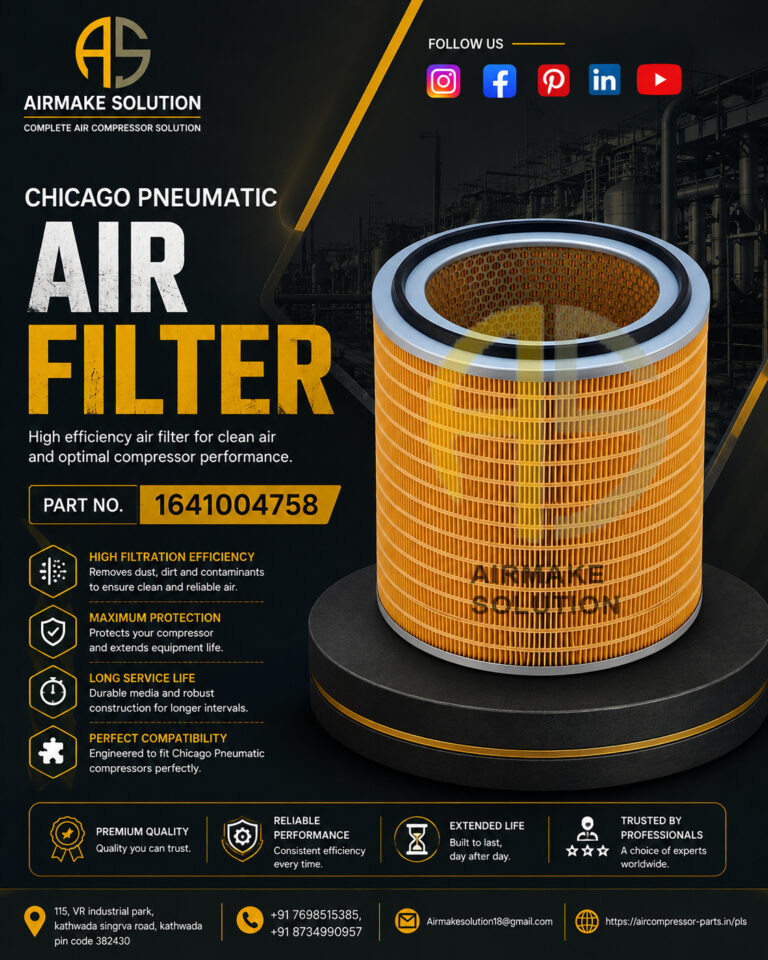
Air Filter
The air filter removes dust and airborne contaminants before they enter the compressor.
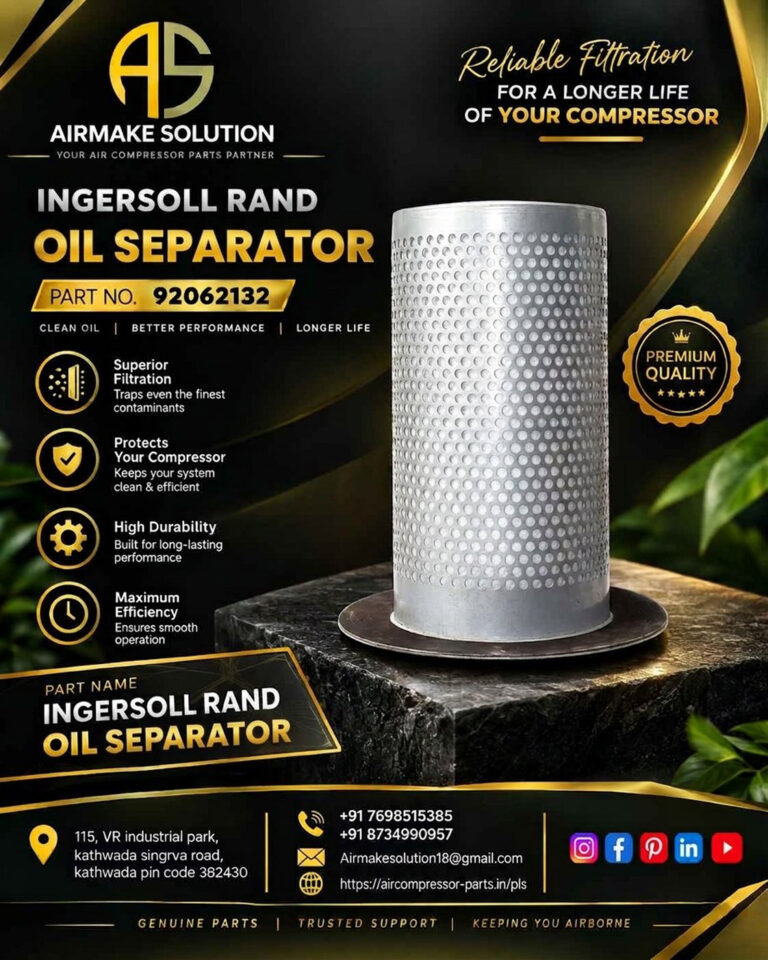
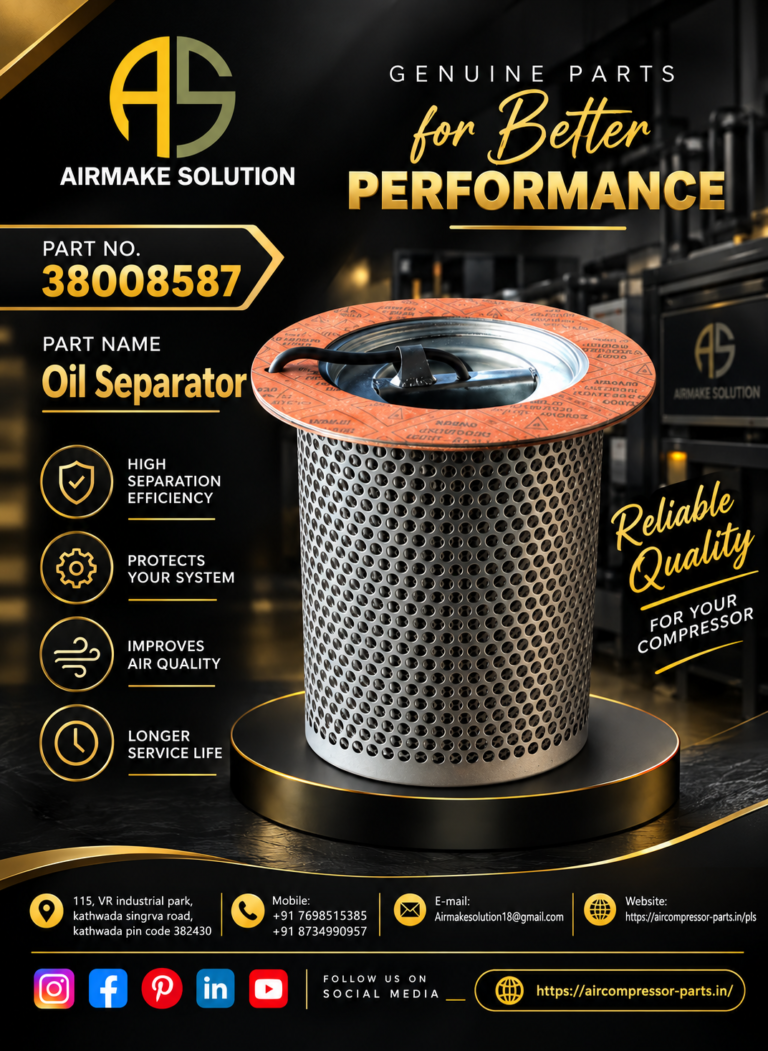
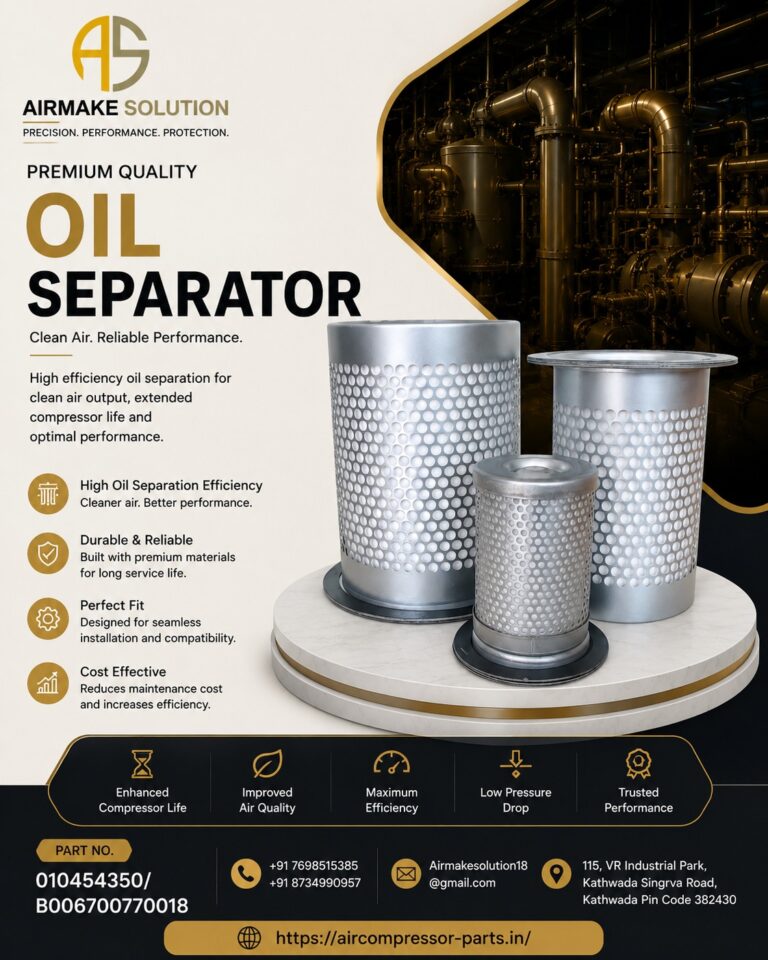
Air Oil Separator
The separator removes oil particles from compressed air to provide clean air output.
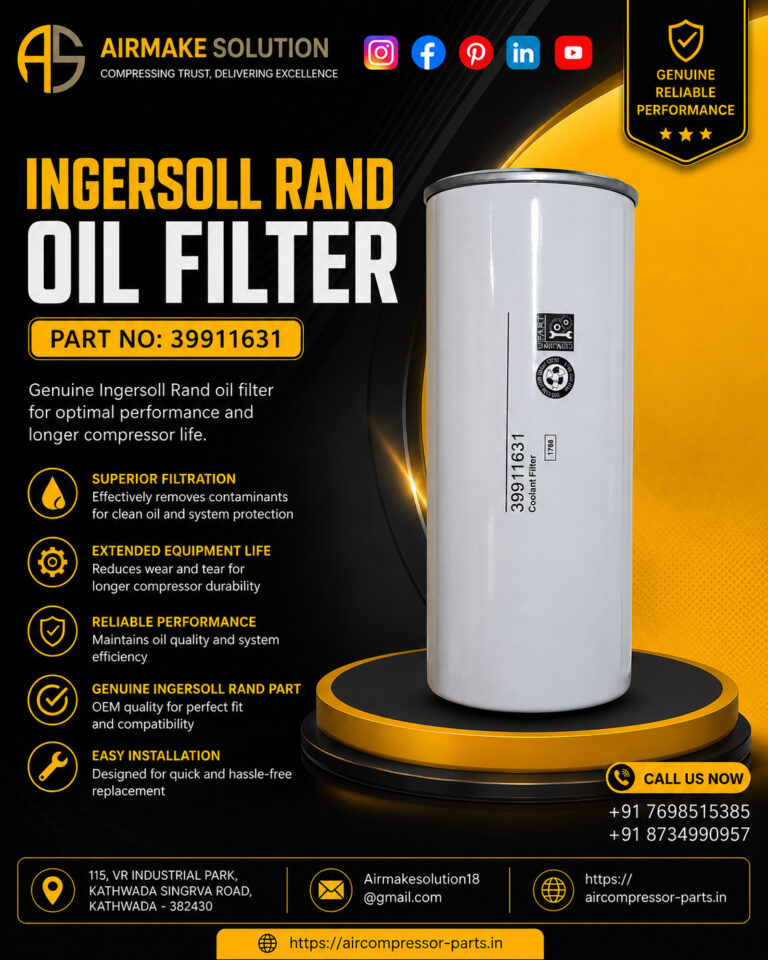
Oil Filter
The oil filter removes contaminants from compressor oil, protecting internal components.
Compressor Oil
Compressor oil lubricates moving parts, cools internal components, and reduces wear.
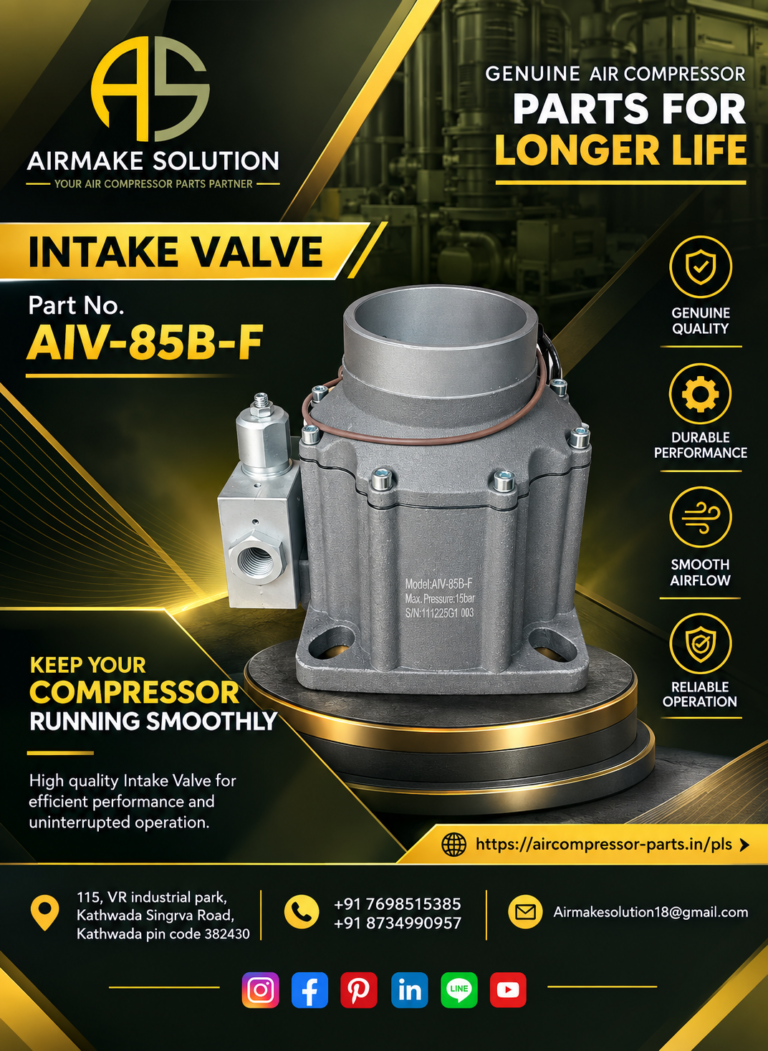
Intake Valve
Controls the amount of air entering the compressor.
Solenoid Valve
Regulates compressor loading and unloading automatically.
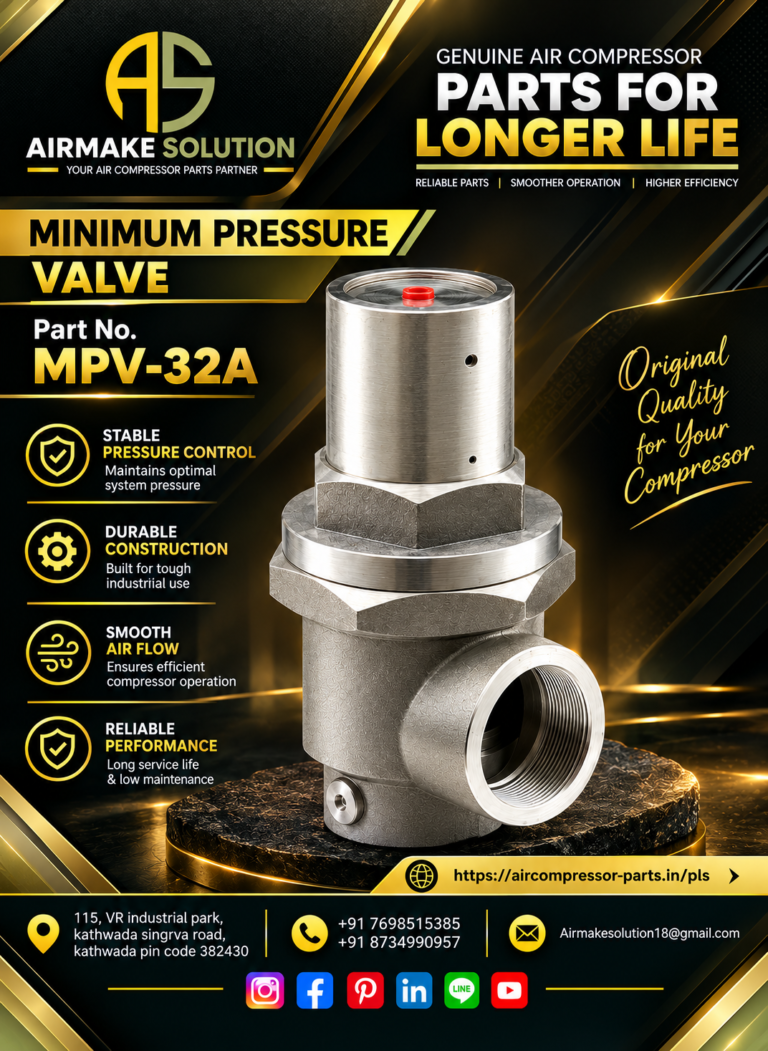
Minimum Pressure Valve
Maintains minimum system pressure and ensures proper oil circulation.
Thermostatic Valve
Controls oil temperature for optimal compressor performance.
Oil Level Gauge
Allows operators to monitor oil levels easily.
Controller
Modern controllers monitor compressor performance, operating hours, pressure, temperature, alarms, and maintenance schedules.
Types of Screw Air Compressors
Oil-Injected Screw Compressors
These compressors use lubricating oil during compression.
Advantages include:
- High efficiency
- Lower operating temperature
- Continuous operation
- Long service life
- Lower maintenance costs
Oil-Free Screw Compressors
Oil-free compressors produce completely oil-free compressed air.
Industries using oil-free compressors include:
- Pharmaceutical
- Food Processing
- Medical
- Electronics
- Chemical Manufacturing
Advantages of Industrial Screw Air Compressors
Continuous Operation
Screw compressors are designed for 24/7 industrial applications without interruption.
High Energy Efficiency
They consume less electricity compared to traditional piston compressors.
Lower Noise
Advanced rotor technology reduces vibration and operating noise.
Longer Service Life
Fewer moving parts reduce wear and maintenance requirements.
Reliable Performance
Screw compressors provide stable air pressure even during continuous operation.
Lower Maintenance Costs
Long service intervals reduce downtime and maintenance expenses.
Improved Productivity
Reliable compressed air supports uninterrupted production.
Industrial Applications
Industrial screw air compressors are used in numerous industries, including:
- Manufacturing
- Automotive
- Textile
- Food Processing
- Pharmaceutical
- Chemical
- Steel Plants
- Cement Industry
- Packaging
- Electronics
- Plastic Manufacturing
- Engineering Workshops
- Mining
- Printing Industry
- Power Generation
Every industry depends on compressed air for automation, production, cleaning, material handling, and packaging.
Why Energy Efficiency Matters
Compressed air systems account for a significant portion of industrial electricity consumption.
An energy-efficient screw air compressor helps businesses:
- Lower electricity bills
- Reduce carbon emissions
- Increase profitability
- Improve production efficiency
- Reduce operating costs
Using Variable Frequency Drive (VFD) compressors further improves energy savings by adjusting motor speed according to air demand.
Importance of Preventive Maintenance
Regular maintenance keeps compressors operating at peak performance.
Proper maintenance includes:
- Replacing air filters
- Changing compressor oil
- Replacing oil filters
- Installing new air-oil separators
- Inspecting belts and couplings
- Cleaning coolers
- Checking drain valves
- Monitoring oil levels
- Inspecting electrical connections
Preventive maintenance reduces unexpected breakdowns and extends equipment life.
Essential Compressor Spare Parts
Using premium spare parts ensures maximum efficiency.
Important replacement parts include:
- Air Filters
- Oil Filters
- Air Oil Separators
- Compressor Oil
- Solenoid Valves
- Thermostatic Valves
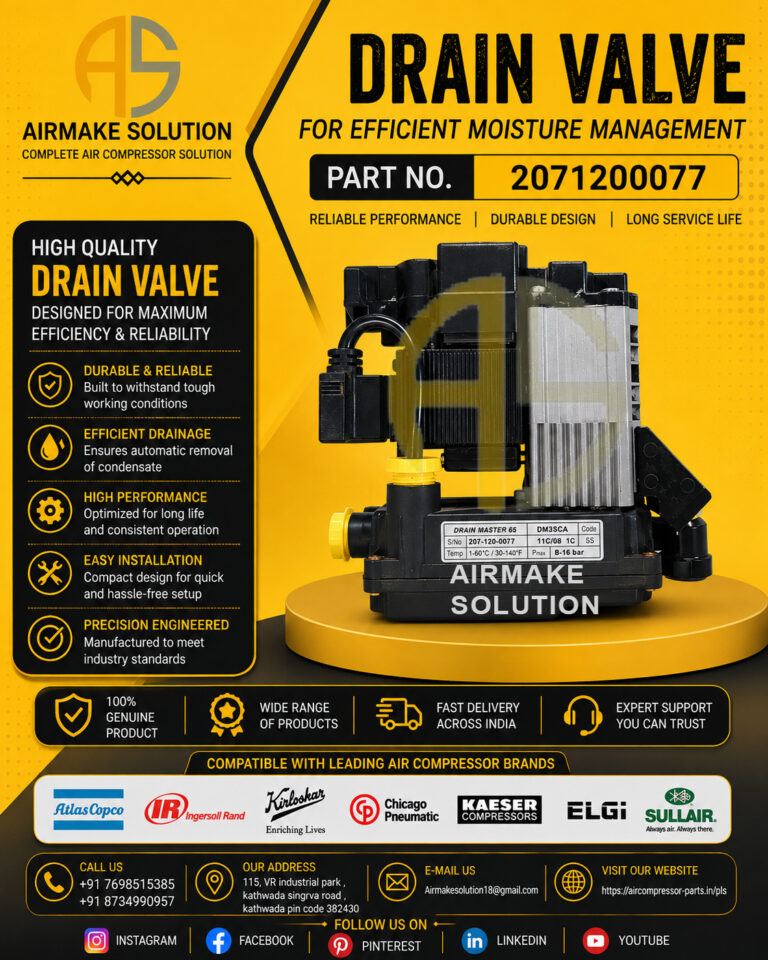
- Drain Valves
- Pressure Sensors
- Temperature Sensors
- Coupling Elements
- Oil Level Gauges
- Controllers
- Service Kits
- Maintenance Kits
Replacing these components according to the recommended schedule improves compressor reliability.
Common Compressor Problems
Some common compressor issues include:
High Temperature
Usually caused by dirty coolers, low oil levels, or blocked filters.
High Oil Carryover
Often caused by a worn air-oil separator.
Pressure Drop
Dirty filters or leaking pipelines can reduce system pressure.
Excessive Noise
Damaged bearings, loose couplings, or worn rotors may produce unusual sounds.
High Energy Consumption
Blocked filters, poor maintenance, or air leaks increase power consumption.
Routine inspections help identify these issues before they become costly failures.
Tips for Choosing the Right Screw Air Compressor
Selecting the right compressor requires careful consideration of your operational needs.
Consider the following:
- Required airflow (CFM)
- Working pressure (Bar/PSI)
- Duty cycle
- Power consumption
- Compressor capacity
- Available installation space
- Noise level
- Energy efficiency
- Maintenance requirements
- Future expansion plans
Choosing a compressor with slightly higher capacity than current demand can accommodate future growth without overloading the system.
Best Practices for Maximizing Compressor Performance
Follow these recommendations to improve compressor efficiency:
- Replace filters on time.
- Use high-quality compressor oil.
- Repair air leaks immediately.
- Monitor operating temperatures.
- Keep cooling systems clean.
- Drain condensate regularly.
- Use genuine replacement spare parts.
- Maintain proper ventilation.
- Schedule preventive maintenance.
- Train operators on compressor operation.
These practices reduce maintenance costs while extending equipment life.
Why Choose High-Quality Spare Parts?
Premium compressor spare parts deliver:
- Better efficiency
- Longer service life
- Reduced downtime
- Improved air quality
- Lower maintenance costs
- Enhanced reliability
- Better equipment protection
Cheap replacement parts often increase long-term operating costs due to reduced durability and poor performance.
Future of Industrial Screw Air Compressors
Modern compressor technology continues to evolve with advanced features such as:
- Smart digital controllers
- IoT connectivity
- Remote monitoring
- Predictive maintenance
- Variable speed technology
- Energy optimization software
- Cloud-based diagnostics
- AI-assisted performance monitoring
These innovations help industries improve efficiency while reducing maintenance costs and energy consumption.
Conclusion
Industrial screw air compressors have become an essential part of modern manufacturing and production facilities because they deliver reliable, energy-efficient, and continuous compressed air. Their ability to operate around the clock with minimal maintenance makes them the preferred choice for industries such as automotive, pharmaceuticals, food processing, textiles, engineering, and electronics. By understanding how screw air compressors work, selecting the right model, using high-quality spare parts, and following a preventive maintenance schedule, businesses can maximize productivity, reduce operating costs, and extend equipment life. Investing in a high-performance screw air compressor and maintaining it with premium filters, separators, valves, lubricants, and controllers ensures long-term reliability and supports uninterrupted industrial operations.